

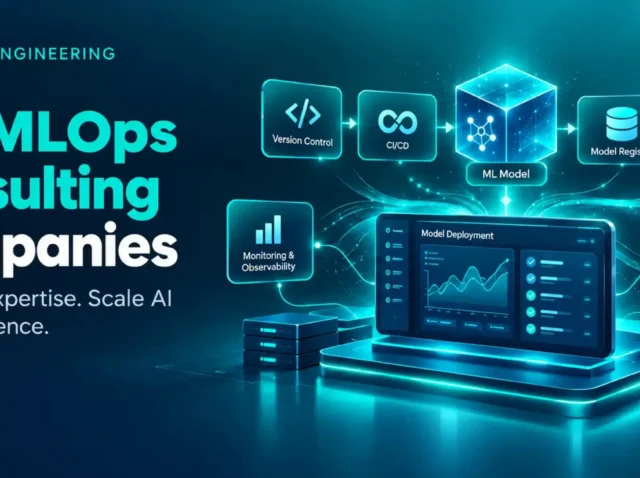
Machine learning is already helping enterprises predict equipment failures, identify fraudulent transactions, forecast demand, and improve operational decisions. But developing a machine learning model is only the beginning. The bigger challenge is keeping that model accurate, reliable, and useful as business…
AI Agents for Denial Management
Building Denial AI Agents From Prevention to Recovery
Every denial is a recoverable revenue event, but only if it is worked the right way, at the right time, with the right documentation. Our Denial Management AI Agent scores denial risk before submission, automates appeal workflows, and learns from every payer interaction to prevent the same denial from happening twice.

Measurable Denial Recovery Outcomes
65
%
First-Appeal Overturn Rate Across All Worked Denials
40
%
Reduction in Repeat Denials Within Two Quarters
30
%
Reduction in Appeal Turnaround Time Through Denial Workflow Automation
Experts in Claim Denial Management AI for Healthcare RCM
CaliberFocus engineers automated denial management AI agents around your payer-specific denial patterns and appeal requirements, intercepting denials upstream before submission and recovering revenue downstream through systematic, payer-intelligent denial workflow automation. No generic templates. No manual triage. No abandoned follow-ups.
Denial prevention starts before the claim leaves. Claims fail at submission because denial risk was never scored upstream. Appeals fail because documentation was never governed. Revenue disappears when follow-up windows close before anyone acts on them.
How Claim Denial Management AI Agents Work
Agents That Prevent, Classify, and Appeal Every Claim Denial
Submission Risk Detection
Before a claim leaves, denial AI agents score probability against payer behavior, coding patterns, and documentation gaps.
Score denial risk before submission
Identify payer-specific denial triggers
Flag high-risk claims for review
Denial Root Cause Classification
Every healthcare denial is classified by actual root cause, not remark code, routing each denial to the correct resolution workflow immediately.
Classify denials by root cause, not just remark code
Separate technical from clinical denials
Route to correct resolution workflow
Automated Appeal Generation
Denial management agents build payer-specific appeals with clinical documentation, policy references, and prior approval evidence, submitted faster.
Generate payer-specific appeal letters
Pull authorization and policy references
Prioritize by recovery probability
Payer Pattern Prevention
Every denial feeds into decision logic, building payer-specific intelligence that adjusts upstream submission behavior to prevent recurrence.
Identify recurring denial patterns
Feed intelligence into coding workflows
Reduce repeat denials over time
Denial Workflow Automation
Routine denial classification, appeal generation, and deadline tracking run autonomously, freeing staff for complex disputes.
Automate routine denial classification
Track appeal deadlines autonomously
Escalate exceptions to staff automatically
Appeal Outcome Tracking
Every appeal is monitored against payer-specific filing windows, closing the loop on every worked denial through systematic denial workflow automation.
Track appeal status per payer
Monitor filing windows in real time
Close every worked denial to resolution
Custom Denial Prevention AI Agents for Your Payer Mix
We develop claim denial management AI agents governed by your payer rules, denial patterns, and appeal requirements. No generic templates. No abandoned follow-ups.
What Sets This Apart From Manual Denial Workflows
Diagnose Before We Build
Claim denial management history, write-off trends, and appeal outcomes tell us exactly which payers, codes, and denial gaps to target first.
Payer Logic, Not Templates
Every automated denial management appeal is built from the payer’s own policy language, prior approval evidence, and clinical record, not a generic template.
Denials Feed Upstream Prevention
Every healthcare denial cycles back into coding and prior auth workflows, building denial prevention intelligence that stops recurrence before the next claim leaves.
Every Denial Tracked to Close
No claim denial ages out unnoticed. Every open balance monitored against payer-specific filing windows through denial workflow automation until resolved.
Our Measurable Impact at a Glance
8
+
Years
of combined leadership experience across AI, data analytics, and enterprise technology innovation
100
%
Custom Solutions
built to address unique business needs beyond standard one-size-fits-all approaches
95
%
Client Retention
demonstrating strong client trust through consistent delivery and measurable business value
35
%
Projects
successfully delivered across AI, data analytics, application engineering, and Dynamics 365
15
%
Clients
serving enterprises across healthcare, finance, retail, and multiple industry sectors globally
24
/7
Support
providing continuous monitoring to ensure reliability, stability, and business continuity
Case Studies
Transforming Revenue Cycle Operations at Summit Health Partners
Summit Health Partners was losing revenue to a 32% denial rate, 45-day AR, and manual workflows across every cycle stage. CaliberFocus deployed autonomous AI agents end to end , from prior auth to denial management.
0
+
Global Partnership
0
+
Years Proven Success
200
+
Global Associates

Frequently Asked Questions
We already have a denial management team. What changes?
Your team stops doing triage and starts doing strategy. Routine claim denial management tasks including classification, appeal generation, and deadline tracking run autonomously through denial workflow automation. Your staff focuses on complex disputes, payer escalations, and cases where clinical expertise actually moves the needle.
How does the agent handle clinical vs. technical denial differences?
Healthcare denials management classification happens at intake before the denial enters any workflow. Clinical denials route to appeal workflows with documentation support. Technical denials including coding errors, eligibility mismatches, and missing modifiers route to correction workflows. Each gets the right response, not the same response.
What happens to denials the agent cannot fully resolve?
They escalate with full context. The automated denial management agent packages denial rationale, prior auth history, clinical notes, and payer policy references, then routes to your team with a recommended next action. Nothing gets abandoned without a human decision.
How quickly does the payer learning actually improve outcomes?
Measurable improvement in repeat claim denial rates typically surfaces within 60 to 90 days. The more denial history available at the start, the faster payer-specific patterns emerge and translate into upstream denial prevention.
Healthcare Denials Management Runs on AI Agents
Every denial prevention AI agent operates on healthcare denials management intelligence, payer behavior data, and claim denial pattern logic.
What our clients say about our work?
When patient data was summarized clearly, documentation felt less burdensome. With CaliberFocus, clinician satisfaction rose from 58% to 81% without changing how teams work.

Dr. Rebecca HallCMIO, Healthcare
Better documentation and fewer audit issues delivered real savings. With CaliberFocus, billing compliance improved to 98.6%, reducing risk while easing the burden on clinicians.

Sophia WilliamsCTO, Clinical care
We gained clear visibility into student performance. Engagement rose, scores improved, and administrative effort dropped by nearly 30 percent, giving educators time to teach.

Andrew MillerDirector, RCM Operations
Thoughts and Insights
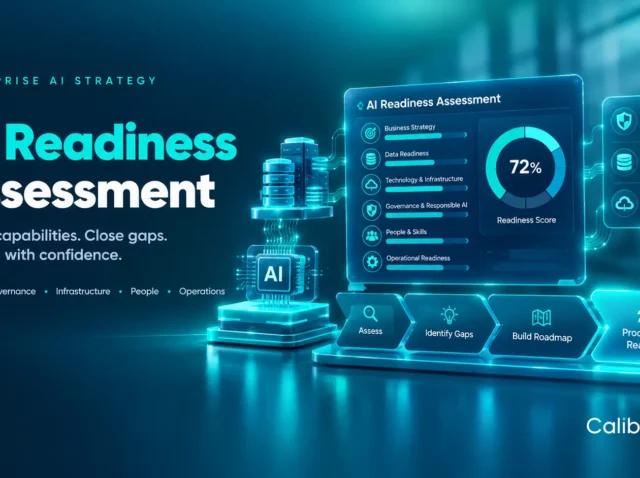
AI Readiness Assessment: Framework, Scoring and Enterprise Roadmap
An AI readiness assessment evaluates whether an organization has the business alignment, data, technology, governance, workforce capabilities, and operational processes required to implement AI successfully. It identifies capability gaps, deployment risks, and investment priorities before an enterprise commits to building or…
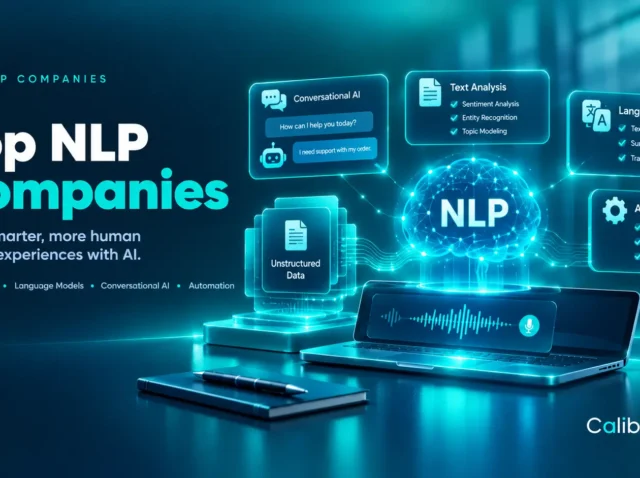
Top 10 Natural Language Processing Companies for Enterprise Solutions (2026)
Natural language processing (NLP) companies develop AI solutions that help enterprises extract, classify, interpret, and use information from documents, emails, customer conversations, service requests, and other language-based records. For businesses evaluating natural language processing companies, the priority is finding a provider…
The Foundation Behind Every RCM AI Agent We Deploy
Every AI agent CaliberFocus builds will be engineered around your revenue cycle, governing eligibility verification, denials management, and insurance workflow automation the way your operations actually demand.
- Every AI Agent Starts With Your Revenue Cycle Logic
- Faster Deployment, Because We Start With Your Workflow
- Real-Time Payer Connectivity Across Your Entire Mix
- One AI System Across Your Entire Revenue Cycle
Security & Compliance

Ready to transform your business? Contact us today.

Application innovation backed by deep engineering..

Measurable Results
50% reduction in technical debt for enterprise clients
True Partnership Model
Dedicated teams integrated with your workflow
Rapid Innovation Velocity
Ship features 3X faster with our DevSecOps pipeline
Enterprise-Grade Security
SOC 2 compliant engineering practices