






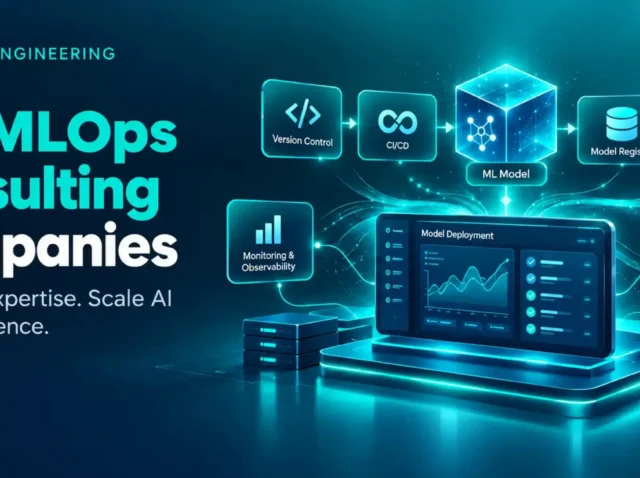
Machine learning is already helping enterprises predict equipment failures, identify fraudulent transactions, forecast demand, and improve operational decisions. But developing a machine learning model is only the beginning. The bigger challenge is keeping that model accurate, reliable, and useful as business…
AI Agents for Prior Authorization
AI Agents for Prior Authorization
Engineered for the Future of RCM.
Our AI agents for prior authorization detect, document, and submit authorization requests without manual intervention. Each agent is engineered around your payer mix, specialty workflows, and CMS compliance requirements from the ground up.
Built with AI orchestration at the core, these agents don’t just respond, they think, decide, and
act across your workflows.
AI agents for prior authorization, in production
40–60%
Typical reduction in prior authorization turnaround time when workflow automation replaces manual submission
15–30%
Fewer prior authorization denials with payer-criteria validation before submission
7 Days
Maximum CMS-mandated turnaround for standard prior authorization requests, effective 2026
Engineers who build prior auth AI
We develop AI agents for prior authorization around the concern driving your revenue cycle, whether that’s prior auth turnaround time, denial exposure, or CMS compliance risk. Every agent is engineered around your payer requirements, LCD and NCD compliance, specialty workflows, and CMS regulations, giving leadership governed, explainable authorization decisions across your revenue cycle operations.
We begin by understanding your team’s primary concern, then build prior authorization workflow automation from the specific points where requests break down. Every touchpoint, from auth requirement detection and clinical documentation generation to real-time status tracking and exception routing, is architected to be governed, explainable, and integrated into how your billing operation runs. Explainable. Auditable. Built around your existing infrastructure.

How prior auth AI agents work ?
The Work Behind Every Detection, Document, and Submission
Prevents Unnecessary Auth
We check every request against payer policy, procedure code, diagnosis, and plan type first. This is automated prior authorization healthcare teams can rely on before anything moves forward.
Detect auth-required vs auth-exempt services
Differentiate payer and plan-level rules
Prevent unnecessary or missed authorization requests
Clinical Criteria Mapping
Clinical details get matched to payer medical necessity criteria before submission. The same logic that powers AI for utilization review applies here, requests go out already aligned to approval standards.
Align diagnosis with procedure criteria
Validate clinical thresholds and prerequisites
Flag criteria mismatches before submission
Evidence & Chart Abstraction
We pull the clinical evidence each case needs straight from EHR notes and attachments. No manual chart digging required.
Auto-extract key clinical indicators
Summarize supporting medical justifications
Reduce manual chart review effort
Every request goes out on the right form, through the right channel, the first time. This is prior authorization workflow automation working as it should, no rejections from formatting or routing errors.
Identify payer-preferred forms
Route via portal, API, or fax alternatives
Ensure submission meets payer intake rules
Medical Coding Automation
Authorization SLA & Turnaround Monitoring
Payer response windows get tracked continuously as part of our prior auth turnaround time automation. Delays get caught early, before they turn into care disruptions.
Monitor payer turnaround SLAs
Identify stalled or overdue authorizations
Trigger follow-ups before escalation thresholds
Denial Management AI Agents
Appeals & Reconsideration Readiness
A denial doesn’t end the process. Every prior auth AI agent we build prepares the appeal, denial reason and documentation included, so reconsideration moves fast.
Classify denial reason codes
Assemble appeal-ready evidence
Support faster resubmission cycles
Your prior auth process has a blind spot somewhere. We'll help you find it.
We find the blind spots in your prior authorization process and build the AI agent that fixes them.
Why CaliberFocus is the right partner for AI agents for prior authorization ?
Manual prior authorization can’t keep up with payer complexity, no matter how much effort a team puts into it.
Approvals Move Without Manual Follow-Up
We check every authorization request before it leaves your organization, so your team isn't chasing a rejection after the fact.
Auth Decisions Adapt to Payer Rule Changes
We keep your prior auth decisions current with every CMS and payer rule change, so nothing gets reprogrammed manually on your end.
Denials Get Prevented Upstream
We validate every submission against current payer policy before it goes out, catching what would've come back as a denial.
Staffing Pressure on Auth Teams Goes Down
We take repetitive, rule-based auth work off your team's plate, so your staff can focus on exceptions and patient care.
The future of prior authorization in RCM is agent‑driven
We build AI agents that handle authorization submissions, documentation readiness, and payer follow-ups, so your process runs on your rules, not a payer’s timeline.
Logistics and Supply Chain

Energy and Utilities

Media and Entertainment

Travel and Hospitality

Education & EdTech
Partnering for innovation & growth
We collaborate with global technology leaders to deliver secure and scalable growth-driven digital solutions. Our partnerships strengthen our ability to innovate, accelerate transformation, and drive measurable business impact for our clients.





Case Studies
Automating docs, coding & compliance
We used generative AI to automate documentation, compliance checks, and medical coding. The solution improves accuracy, cuts manual effort, speeds turnaround, and ensures regulatory compliance in clinical use.
0
+
Global Partnership
0
+
Years Proven Success
200
+
Global Associates
What our clients say about our work?
When patient data was summarized clearly, documentation felt less burdensome. With CaliberFocus, clinician satisfaction rose from 58% to 81% without changing how teams work.
Dr. Rebecca HallCMIO, Healthcare
Better documentation and fewer audit issues delivered real savings. With CaliberFocus, billing compliance improved to 98.6%, reducing risk while easing the burden on clinicians.
Sophia WilliamsCTO, Clinical care
We gained clear visibility into student performance. Engagement rose, scores improved, and administrative effort dropped by nearly 30 percent, giving educators time to teach.
Andrew MillerDirector, Education Technology
Thoughts and Insights
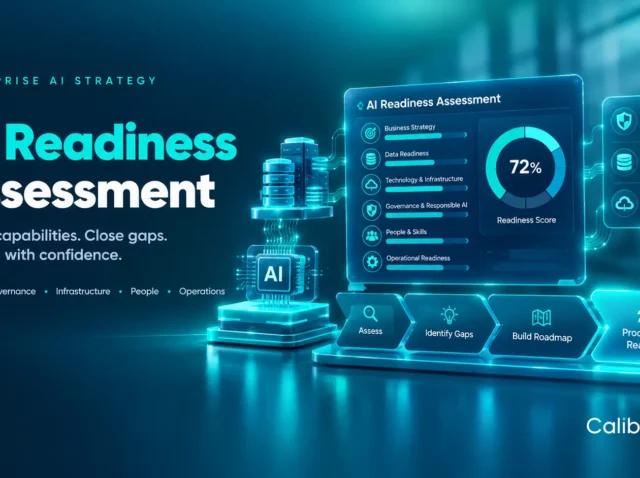
AI Readiness Assessment: Framework, Scoring and Enterprise Roadmap
An AI readiness assessment evaluates whether an organization has the business alignment, data, technology, governance, workforce capabilities, and operational processes required to implement AI successfully. It identifies capability gaps, deployment risks, and investment priorities before an enterprise commits to building or…
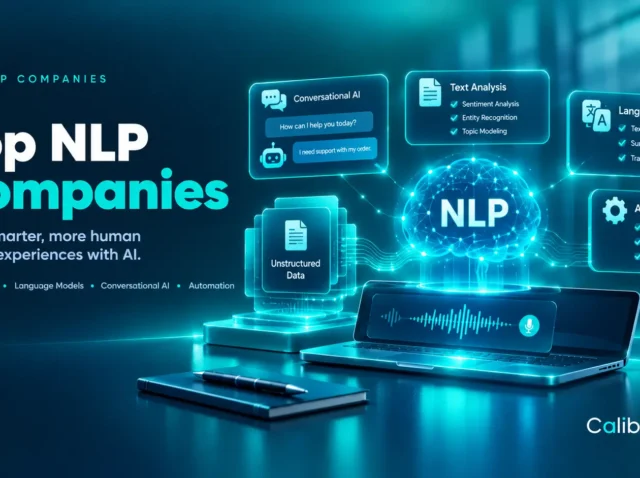
Top 10 Natural Language Processing Companies for Enterprise Solutions (2026)
Natural language processing (NLP) companies develop AI solutions that help enterprises extract, classify, interpret, and use information from documents, emails, customer conversations, service requests, and other language-based records. For businesses evaluating natural language processing companies, the priority is finding a provider…

Application innovation backed by deep engineering..

Measurable Results
50% reduction in technical debt for enterprise clients
True Partnership Model
Dedicated teams integrated with your workflow
Rapid Innovation Velocity
Ship features 3X faster with our DevSecOps pipeline
Enterprise-Grade Security
SOC 2 compliant engineering practices
Why Choose CaliberFocus for AI Agents for Prior Authorization
CaliberFocus develops healthcare AI agents designed to catch authorization issues before they become denials, not after. Prior authorization automation is built around your specific payer mix, medical necessity criteria, and CMS requirements, so auth requirements, clinical criteria, and payer-specific forms are resolved before submission, not discovered downstream in appeals.
- Deep expertise in prior authorization across complex, multi-payer environments
- Auth logic configured to your specific payer policies and CMS requirements, not a generic ruleset
- Real-time criteria checks that catch mismatches before a request is ever submitted
- Human-in-the-loop oversight with enterprise-ready integration into existing EHR and billing systems
Security & Compliance
