

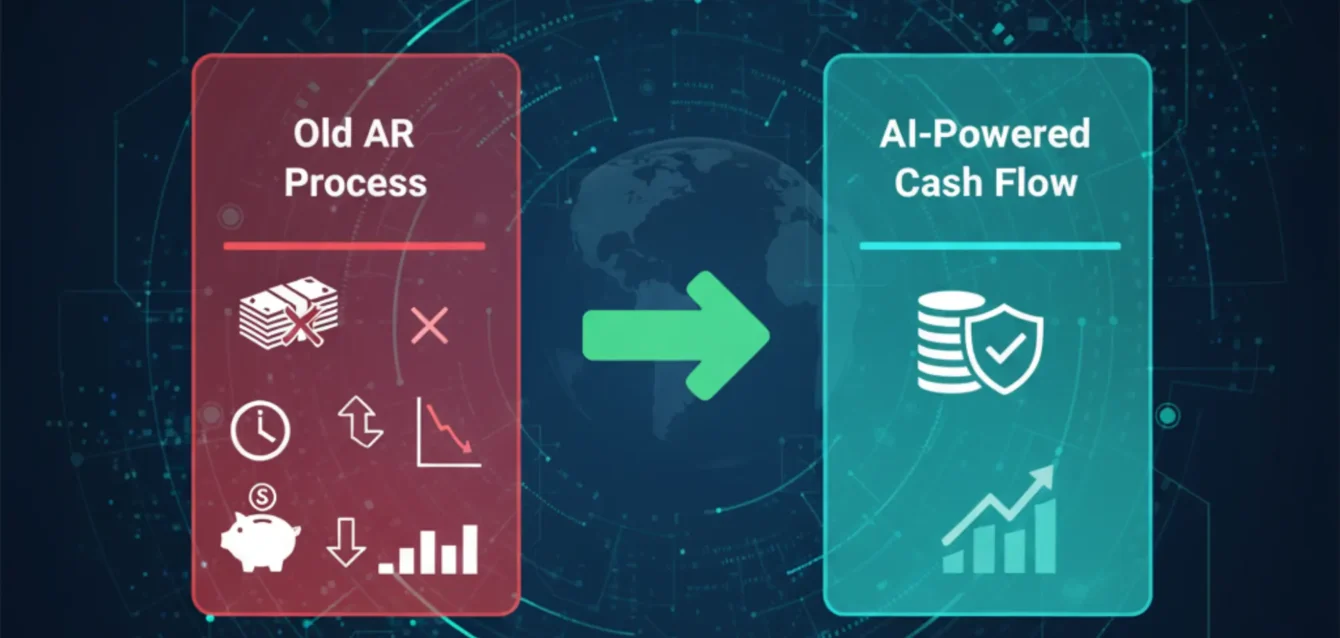
If you manage revenue cycle operations, you already know the pressure, denied claims stacking up, remittances that don’t reconcile, and billing teams buried in manual payer follow-ups. AI in accounts receivable is changing that reality. Accounts Receivable AI Agents are now helping RCM teams automate denial management, accelerate payment posting, and recover revenue that would otherwise slip through the cracks.
Implementing an Accounts Receivable AI Agent isn’t a decision to rush. But the results organizations are seeing make a compelling case for moving forward thoughtfully.
- What are the real benefits for RCM teams?
- How does AI for accounts receivable unlock hidden revenue potential?
What Are the Real Benefits for RCM Teams?
Anyone working in the revenue cycle knows the reality, claims get denied, ERAs don’t match, and your AR team spends more time chasing payers than resolving exceptions. That’s exactly the environment where accounts receivable AI delivers measurable impact.
Unlike generic automation, AI agents built for RCM understand payer-specific rules, identify denial patterns before they compound, and prioritize the accounts most at risk of write-off. The result is a collections operation that’s faster, more accurate, and far less dependent on manual intervention.
The numbers from RCM organizations using AI bear this out:
- Net collections improved by up to 32%, reducing revenue leakage across payer classes
- Denial resolution accelerated by 78%, cutting the time from denial receipt to overturn
- Days in AR dropped by 25%, directly improving cash flow and working capital
These aren’t incremental gains. For a mid-size health system or physician group, a 25% reduction in Days in AR can mean millions in previously delayed reimbursements now flowing on time.
Artificial intelligence in accounts receivable frees your billing team from repetitive follow-up work, so they can focus on high-value exceptions, underpayment disputes, and payer contract compliance instead.
The Growing Role of AI Agents in Healthcare Revenue Cycle AR
Accounts receivable in healthcare has always been complex, claims move through multiple payer adjudication layers, denial reasons vary by payer and procedure, and billing teams spend significant time on manual follow-ups that could be automated. AI in accounts receivable is changing that operational reality, and changing it fast.
AI agents built for RCM environments do more than automate tasks. They learn payer-specific adjudication patterns, flag claims likely to be denied before submission, and automatically prioritize the AR worklist based on denial age, payer, and recovery probability. The result is a collections operation that responds in real time, not at the end of the billing cycle.
Where this matters most in practice:
- Denial prevention: AI scrubs claims against payer rules before submission, catching missing authorizations, coding mismatches, and eligibility gaps before they become rejections. See how AI agents are actively reducing claim denial rates across healthcare systems, and what that means for your AR recovery timeline.
- Prior authorization bottlenecks: Claims held up by missing or expired authorizations are among the most preventable denial triggers in RCM. Autonomous AI agents now handle prior authorization workflows end-to-end, identifying gaps before claims go out the door and keeping your AR from aging unnecessarily.
- Worklist prioritization: High-risk accounts, those approaching timely filing limits or carrying high-dollar underpayments, surface automatically, so billing specialists work what matters most rather than manually sorting aging reports. This is core to how autonomous AI agents for RCM govern AR decisions without waiting for human intervention.
- Payer pattern recognition: AI identifies when a specific payer is systematically underpaying against contracted rates, enabling proactive underpayment recovery rather than reactive audits that happen months after the fact.
- 24/7 AR monitoring: Remittances are reconciled against ERAs continuously, with exceptions flagged for human review rather than buried in manual posting queues.
This level of automation integrates directly with your EHR, practice management system, and clearinghouse, keeping claim data synchronized across Epic, Cerner, or whatever system your organization runs on. Billing specialists are freed from routine follow-up work to focus on complex denial appeals, payer escalations, and contract compliance, the high-value work that actually moves the revenue needle.
Key Benefits of AI Agents for RCM Accounts Receivable Management
Revenue cycle teams don’t struggle because they lack effort. They struggle because the work is structured in a way that buries skilled billing specialists under tasks a machine could handle. That’s the core problem AI agents solve in RCM AR, and the benefits flow directly from that shift.

From Reactive Processing to Strategic Recovery
When claim follow-ups, ERA reconciliation, and denial sorting move off your team’s plate, something important happens. Specialists stop being reactive processors and start being strategic problem-solvers. The ones who spent their day chasing payer portals are suddenly available for complex denial appeals and underpayment disputes that actually recover revenue. That reallocation of human capacity is the first and most immediate benefit, and it compounds over time.
Fewer Denials Before They Start
Most RCM teams fight denials after they happen. AI shifts that dynamic upstream. Here’s where it intervenes before a claim becomes a problem:
- Coding validation against NCCI edits and payer-specific rules before submission
- Authorization gap detection that flags missing or expired prior authorizations automatically
- Modifier and diagnosis mismatches caught during claim scrubbing, not during payer adjudication
- Eligibility verification confirmed in real time, eliminating a leading cause of preventable rejections
The result is a higher clean claim rate and a shorter AR queue, because fewer claims enter it.
What Real-Time AR Visibility Actually Changes
“We were always managing last week’s problem. By the time the aging report landed, the window to act had already narrowed.”
That’s the reality for most RCM directors still relying on static dashboards. AI changes the timeline entirely, giving your team a live view of what’s pending adjudication, what’s approaching timely filing limits, and what’s been denied and needs action today. Reimbursement forecasting stops being an estimate and starts being a data-driven projection.
Payer Intelligence: Turning Patterns Into Recovery
Not all underpayments are visible until it’s too late to dispute them. AI surfaces what manual AR processes miss:
| What AI Detects | What It Enables |
| Payer systematically underpaying a procedure code | Proactive underpayment dispute before write-off |
| Adjudication delays beyond contractual timelines | Timely escalation with documentation ready |
| Denial clustering around a specific modifier | Upstream coding correction across all similar claims |
| High denial rate from a single payer | Payer-specific workflow adjustment in real time |
Scaling Without Scaling Headcount
Adding a new specialty, onboarding a new facility, expanding payer contracts, each of these adds claim volume that would traditionally require proportional headcount increases. AI agents absorb that volume without the overhead, making this a long-term operational advantage rather than a short-term efficiency gain.
AI Agents Turned Summit Health Partners’ Revenue Cycle Around
A multi-specialty medical group eliminated manual bottlenecks, recovered $4.2M in lost revenue, and cut Days in AR by 35%, all within 12 months.
How to Integrate AI Agents Into Your RCM AR Strategy
Step 1: Audit Before You Automate
Before selecting a platform or scoping a deployment, map your current claim lifecycle end to end. Where does manual effort concentrate? Which denial categories repeat every month without resolution? Which payers consistently age your AR without clear adjudication timelines?
This audit isn’t administrative, it’s the foundation your AI implementation will be built on. Without it, you’re configuring a system against assumptions rather than evidence.
Step 2: Define What Success Looks Like in RCM Terms
Set targets that mean something to your revenue cycle specifically:
- Days in AR reduction target (e.g., from 45 to 35 days within 6 months)
- Clean claim rate threshold (industry benchmark: above 95%)
- Denial rate ceiling (high-performing RCM operations target below 5%)
- Net collection rate improvement over a defined period
- Cost to collect reduction as automation absorbs manual volume
Vague goals produce vague implementations. Specific KPIs give your team and your AI partner a shared definition of ROI.
Step 3: Match AI to Your Actual Tech Stack
RCM environments aren’t interchangeable. Your AI agents need to integrate natively with:
Your EHR (Epic, Cerner, Meditech) → for clinical documentation and coding context
Your Practice Management System → for scheduling, eligibility, and claim generation
Your Clearinghouse (Availity, Change Healthcare) → for claim submission and ERA feeds
Solutions requiring heavy middleware or custom API builds add deployment risk and delay time-to-value. Integration compatibility isn’t a technical detail, it’s a strategic decision.
Step 4: HIPAA Compliance Is Non-Negotiable
Any AI agent operating inside your revenue cycle touches protected health information. Before a single claim moves through an AI-driven workflow, verify:
- End-to-end encryption across all data transfers
- Role-based access controls limiting PHI exposure
- Full audit trail capability for compliance reporting
- BAA (Business Associate Agreement) in place with your AI vendor
- Regular security audits built into the service agreement
The compliance requirements around deploying AI in healthcare go beyond basic data security, HIPAA compliance for AI in healthcare covers what healthcare organizations specifically need to verify before any AI integration goes live.
Step 5: Pilot Narrow, Then Scale
The most common RCM AI implementation mistake is deploying broadly before proving value in a controlled environment. Start with one of the following:
- A single high-volume denial reason code (e.g., CO-97, CO-4)
- One consistently underperforming payer
- One facility or specialty within a larger health system
Measure denial overturn rate, time to resolution, and staff hours saved over 60 to 90 days. A focused pilot surfaces integration gaps, builds internal confidence, and gives you real performance data before you scale.
Step 6: Change Management Is Half the Work
AI changes how your billing specialists work, not whether they’re needed. What that transition requires in practice:
Training teams to act on AI-generated worklists rather than building their own manually Teaching specialists to interpret denial pattern reports and identify systemic issues, not just individual claims Establishing clear escalation protocols for exceptions the system flags but cannot resolve autonomously Creating feedback loops where billing staff validate AI decisions and surface edge cases that refine the model over time
Organizations that treat this as a technology rollout rather than a workflow transformation consistently underperform against their implementation targets.
Step 7: Monitor, Refine, and Let the Data Lead
Deployment isn’t the finish line, it’s where the real optimization begins. Most RCM teams make the mistake of reviewing AI performance quarterly, by which point denial patterns have compounded, payer behavior has shifted, and recoverable revenue has already aged past the point of easy intervention. Monthly review cadence is the minimum. Weekly is better for the first 90 days post-deployment.
What to track and why it matters:
| KPI | What It Tells You |
| Days in AR | Whether claims are moving through adjudication faster or stalling at the same bottlenecks |
| Denial Rate | Whether upstream claim scrubbing is catching more errors before submission |
| First-Pass Resolution Rate | The percentage of claims paid on first submission, your clearest measure of clean claim quality |
| Net Collection Rate | How much of your collectible revenue is actually being recovered after adjustments and write-offs |
| Cost to Collect | Whether automation is reducing the per-claim administrative burden over time |
The data AI generates between reviews is as important as the reviews themselves. When a specific payer starts denying a procedure code at a higher rate, the system surfaces it, but someone needs to act on that signal by adjusting the payer-specific workflow before it spreads across your AR. When a denial category drops significantly, that’s confirmation the upstream fix is working and a signal to look for the next highest-impact opportunity.
The organizations getting the most out of RCM AI aren’t the ones who deployed it and moved on. They’re the ones treating it as a continuously improving system, feeding performance signals back into worklist prioritization, refining denial logic as payer rules evolve, and using each review cycle to identify where the next layer of automation can recover more revenue with less manual effort.
Your RCM Is Automated. But Is It Intelligent?
AI agents go beyond automation, predicting denials, prioritizing AR, and recovering revenue before it slips through.
How to Choose the Right AI Agent Partner for RCM Accounts Receivable
Not every AI for accounts receivable is built for healthcare. Here’s what separates a capable RCM AI partner from a generic vendor:
- RCM Domain Expertise Your partner must understand payer adjudication logic, denial reason codes, and CMS coverage rules, not just AI. Technical capability without RCM depth automates the wrong things faster.
- EHR-Native Integration AI in accounts receivable only works if it connects directly to your EHR, practice management system, and clearinghouse. Ask specifically about Epic, Cerner, and Meditech compatibility before any contract conversation.
- HIPAA-Compliant by Architecture PHI runs through every RCM AR workflow. BAAs, audit trails, and role-based access controls should be standard, not add-ons.
- Payer-Specific Configuration A real Accounts Receivable AI Agent is configured around your payer mix and specialty, not a pre-built template handed to every client.
- Continuous Optimization Payer rules change. Denial patterns shift. Your partner should be actively refining the system against your KPIs, not just troubleshooting when something breaks.
Final Thoughts
Integrating an Accounts Receivable AI Agent marks a pivotal shift toward smarter, real-time cash flow management. Organizations leveraging AI-driven tools can benefit from:
- Enhanced efficiency and reduced financial risk, turning accounts receivable from a bottleneck into a business advantage.
- Seamless adaptation to your existing infrastructure, enabling swift deployment, scalable growth, and solid security.
- Ongoing support and optimization from a partner committed to elevating your cash flow strategy continuously.
What truly sets CaliberFocus apart is our blend of deep financial domain expertise and cutting-edge AI-first technology, tailored to meet the needs of modern enterprises. This approach aligns with the broader evolution in healthcare revenue cycle operations, where intelligent automation, spanning from speeding prior authorization approvals to comprehensive revenue cycle management, drives operational agility and improved financial outcomes.
FAQs
AI for accounts receivable automates payment follow-ups and monitors customer behavior in real-time, helping prioritize collections and optimize cash flow efficiently with accuracy and operational ease.
Artificial intelligence in accounts receivable uses predictive analytics to identify late payments and cash shortages early, enabling proactive financial decisions and risk management.
Yes, AI agents for accounts receivable scale flexibly to fit medium-sized businesses, streamlining processes and optimizing cash flow without heavy resource demands.
CaliberFocus provides customized Accounts Receivable AI Agent deployment with ERP integration and continuous analytics, automating routine tasks and delivering actionable cash flow insights.
Their features include automated invoicing, personalized communication, real-time payment tracking, risk prioritization, and adaptive AI strategies, all designed to maximize cash flow outcomes.