

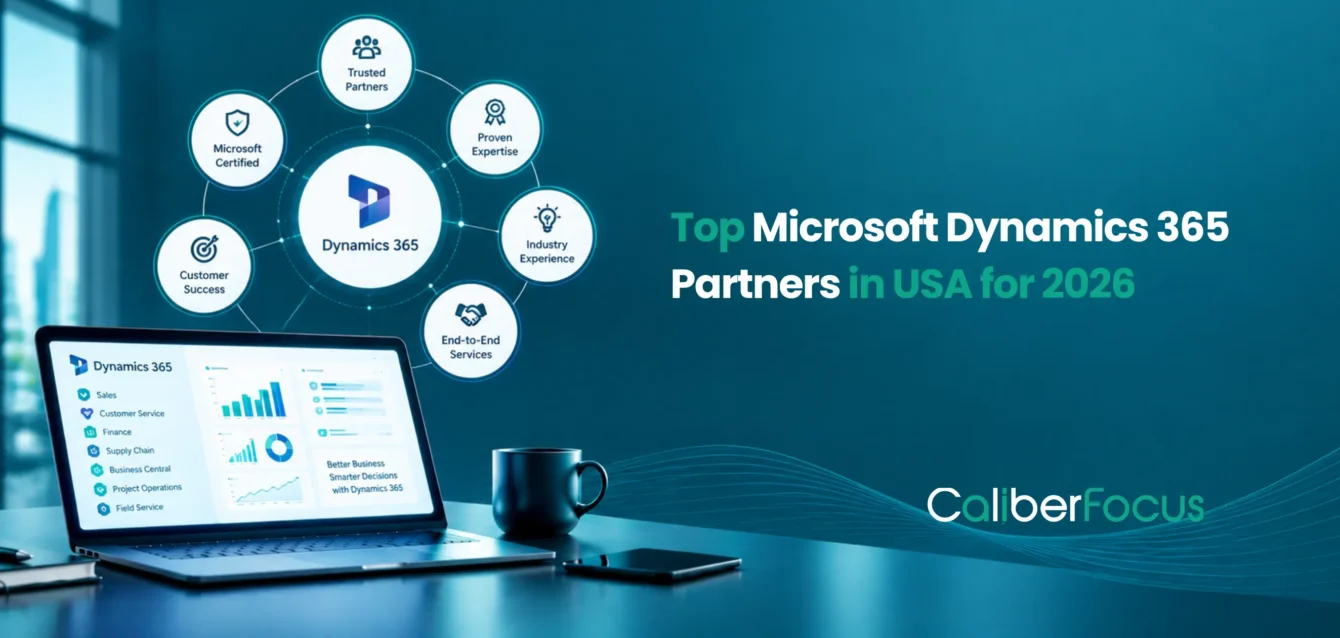
U.S. organizations are increasingly evaluating Dynamics 365 in environments where ERP and CRM decisions extend well beyond replacing a business application. Manufacturers may need tighter coordination across finance, supply chain, inventory, and production. Healthcare organizations have different requirements around financial operations, patient-facing processes, data, and compliance. Retail, distribution, financial services, and professional services businesses may be dealing with disconnected customer, finance, reporting, and operational workflows.
That makes the partner decision more specific: Does the provider understand the Dynamics 365 application you need, the operating realities of your industry, and the systems the platform must work with?
The Microsoft Dynamics 365 partners in USA compared below serve different segments of that market. Some are suited to large enterprise transformation, others have deeper ERP, Business Central, manufacturing, migration, CRM, or managed-services experience. The comparison focuses on those differences so organizations can build a shortlist around the project they are actually planning.
What should shape the shortlist?
Dynamics 365 product fit • Industry and process experience • Implementation complexity • Legacy migration • Enterprise integrations • Data requirements • User adoption • Post-go-live support
Planning a Dynamics 365 Initiative?
Connect your ERP and CRM strategy with the processes, data, integrations, and operational requirements that will shape implementation.
Top Microsoft Dynamics 365 Partners in USA at a Glance
The right shortlist will depend on the Dynamics 365 applications involved, project complexity, industry requirements, integration landscape, implementation model, and long-term support expectations. Current partner-selection resources similarly distinguish providers by factors such as Dynamics product coverage, industry, company size, geography and implementation scope.
| Partner | Industry and Organization Focus | Business and Operational Focus | Delivery Coverage |
| CaliberFocus | Healthcare, manufacturing, financial services, retail, life sciences and logistics organizations | Connect finance, ERP, sales, customer engagement, operations, data, workflows and AI | Consulting, process optimization, implementation, migration, integration, Power Platform, Copilot and AI, adoption, managed services |
| Hitachi Solutions America | Manufacturing, retail and enterprise organizations | Modernize finance, supply chain, sales, commerce, customer experience and enterprise operations | Dynamics implementation, integration, Power Platform, data and broader Microsoft transformation |
| Avanade | Large organizations across financial services, healthcare, manufacturing, retail and other sectors | Connect finance, sales, service, field operations, customer experience and enterprise workflows | Dynamics implementation integrated with Microsoft cloud, data, Power Platform and AI transformation |
| Techcronus | Healthcare, finance, manufacturing, retail and distribution organizations | Manage ERP, finance, sales, customer service, field service and workflow automation | Implementation, customization, integration, migration, Power Platform and support |
| Dynamics Square USA | Manufacturing, automotive, media and other organizations using or moving to Microsoft business applications | Run finance, supply chain, sales, customer service and operational workflows | Implementation, upgrade, integration, Power Platform and legacy Dynamics migration |
| Alithya | Manufacturing, healthcare, financial services and professional services organizations | Modernize finance, supply chain, sales, customer operations and connected business processes | Dynamics implementation, integration, Power Platform and business transformation |
| DXC Technology | Large and multinational organizations with complex enterprise technology environments | Connect finance, customer operations and business processes across wider enterprise systems | Enterprise implementation, systems integration, cloud modernization and managed technology services |
| Nevas Technologies | Manufacturing, distribution, professional services and healthcare organizations | Manage finance, purchasing, inventory, sales, service and operational reporting | Business Central implementation, migration, integration, Copilot and ongoing support |
| Western Computer | Manufacturing, distribution, food and beverage and CPG organizations | Manage finance, production, inventory, warehousing, supply chain, sales and distribution | ERP implementation, migration, integration, industry solutions and ongoing support |
| Sunrise Technologies | Retail, apparel, consumer products, manufacturing and distribution organizations | Connect finance, supply chain, manufacturing, inventory, commerce and retail operations | ERP, commerce and supply chain implementation, integration and transformation |
| Velosio | Manufacturing, distribution, professional services and agribusiness organizations | Manage finance, sales, customer service, projects, supply chain and business reporting | ERP and CRM implementation, migration, industry solutions, Power Platform and managed services |
How We Evaluated Microsoft Dynamics 365 Partners
This list is intended as a starting point for partner evaluation rather than a universal ranking. Organizations can require very different capabilities depending on whether they are deploying Business Central, modernizing enterprise ERP, replacing CRM, migrating from a legacy Dynamics environment, or extending an existing Dynamics 365 platform.
The evaluation considers publicly available information across:
Organizations should validate current Microsoft designations, relevant project experience, delivery resources, references, and service coverage directly with each provider before creating a final shortlist.
CaliberFocus

Best suited for: Organizations that need Dynamics 365 aligned with broader business processes, data, integrations, automation, and ongoing platform requirements.
CaliberFocus approaches Dynamics 365 as part of business and operational transformation rather than as an isolated ERP or CRM deployment. Its Dynamics 365 capabilities span consulting, process optimization, migration, ERP, customer engagement, Business Central, Power Platform, Copilot and AI integration, user adoption, and managed services.
This breadth can be relevant when a Dynamics initiative extends beyond application configuration. Organizations may need to redesign processes, migrate legacy data, connect Dynamics with existing enterprise applications, establish reporting and analytics, or determine where Power Platform and AI should extend the platform.
Dynamics 365 Capabilities
- Dynamics 365 consulting and strategy
- Business process optimization
- Dynamics 365 migration and modernization
- Dynamics 365 ERP
- Customer Engagement
- Dynamics 365 Business Central
- Microsoft Power Platform
- Dynamics 365 Copilot and AI integration
- User adoption
- Managed services and ongoing optimization
This breadth can be relevant when a Dynamics initiative extends beyond application configuration, particularly when organizations expect the benefits of Microsoft Dynamics 365 for enterprises to depend on connected processes, reliable data, enterprise integrations, reporting, automation, and user adoption.
What Buyers Should Evaluate
CaliberFocus approaches Dynamics 365 as part of a broader business transformation rather than an isolated ERP or CRM deployment. Its capabilities connect business process optimization, Dynamics 365 implementation and migration, customer engagement, Power Platform automation, Copilot and AI integration, user adoption, and managed services across the transformation lifecycle.
This makes the approach relevant when Dynamics 365 must work across business processes, enterprise data, integrations, automation, and user workflows, with continued optimization after deployment.
Hitachi Solutions America

Best suited for: Large enterprises and organizations with complex Microsoft business application environments.
Hitachi Solutions America has a long-standing Microsoft-focused practice spanning Dynamics 365, Power Platform, Azure, data, and related Microsoft technologies. Its U.S. operations are headquartered in Irvine, California, and Hitachi Solutions identifies its North American business around Microsoft cloud solutions, system integration, and consulting.
The company has substantial experience within the Microsoft partner ecosystem. Hitachi Solutions reports Microsoft recognition across multiple years, including the 2025 Microsoft Partner of the Year award for Dynamics 365 Finance.
Dynamics 365 Capabilities
Its Dynamics practice includes enterprise ERP and customer engagement requirements, alongside Microsoft cloud, Power Platform, data, and AI capabilities. This makes Hitachi Solutions relevant to organizations evaluating larger Microsoft-centric transformation programs rather than a single isolated application.
What Buyers Should Evaluate
Organizations should determine whether the scale of the provider, delivery model, industry capabilities, geographic requirements, and broader Microsoft technology scope align with the complexity of the planned program.
Avanade

Best suited for: Large enterprises pursuing broader Microsoft platform transformation.
Avanade operates across Microsoft technologies and is often considered where Dynamics 365 forms one part of a larger enterprise modernization program involving cloud, data, applications, automation, security, and AI.
Its Dynamics capabilities can support organizations looking to coordinate ERP or CRM modernization with the wider Microsoft ecosystem rather than treating Dynamics as a standalone implementation.
Dynamics 365 Capabilities
Avanade’s Dynamics work spans enterprise business applications and related Microsoft technologies, making it relevant where organizations require a combination of consulting, implementation, engineering, and long-term modernization capabilities.
What Buyers Should Evaluate
Enterprises should assess whether the scale and structure of a large global provider match the program’s delivery requirements, budget, governance model, regional needs, and desired level of specialist attention.
Techcronus
Best suited for: Organizations seeking Dynamics 365 implementation, customization, integration, and support across ERP and CRM requirements.
Techcronus provides services around Dynamics 365 CRM, Business Central, Finance and Operations, Sales, Customer Service, Field Service, and the Microsoft Power Platform.
Its broader Microsoft capabilities also include Azure, application modernization, and system integration, making it relevant where Dynamics needs to interact with other applications and cloud services.
Dynamics 365 Capabilities
- Dynamics 365 CRM
- Business Central
- Finance and Operations
- Sales and Customer Service
- Field Service
- Power BI
- Power Apps
- Power Automate
- Copilot-related capabilities
- Integration and support
What Buyers Should Evaluate
Buyers should confirm experience with the specific Dynamics applications involved, comparable implementation complexity, industry requirements, migration scope, and the support model available after deployment.
Dynamics Square USA

Best suited for: SMB and mid-market organizations, particularly those evaluating Business Central or migrations from legacy Microsoft ERP environments.
Dynamics Square focuses heavily on Microsoft Dynamics and provides services across Business Central, Finance and Supply Chain, CRM, migration, Power Platform, and support.
Current Dynamics Square material emphasizes Business Central, Finance and Supply Chain, CRM implementation, and migrations from platforms such as Dynamics GP and NAV.
Dynamics 365 Capabilities
- Business Central implementation
- Dynamics 365 Finance and Supply Chain
- CRM implementation
- Legacy Dynamics migration
- Data migration and integration
- Power Platform
- Post-go-live support
Organizations deciding between Microsoft’s ERP options may first want to compare Dynamics 365 Finance vs Business Central because the product decision can materially affect the partner expertise required.
What Buyers Should Evaluate
Organizations should confirm whether their requirements align with the provider’s primary market focus, Dynamics product expertise, industry experience, project scale, and preferred delivery model.
Alithya

Best suited for: Organizations combining Dynamics 365 implementation with broader process and technology transformation.
Alithya operates across business and technology consulting, with capabilities spanning Dynamics 365, Power Platform, analytics, and organizational transformation.
Its Dynamics work includes ERP and customer-facing applications, making the company relevant to organizations where platform modernization requires coordination between business processes, technology implementation, reporting, and change.
Dynamics 365 Capabilities
- Dynamics 365 Finance
- Supply Chain
- CRM and customer-facing applications
- Power Platform
- Analytics
- Change and transformation services
What Buyers Should Evaluate
Organizations should examine relevant industry experience, project scale, delivery location, change-management requirements, and whether the engagement needs broader transformation advisory alongside Dynamics implementation.
DXC Technology

Best suited for: Large enterprises with complex technology estates, global operations, and significant integration requirements.
DXC Technology operates across enterprise IT services and can support large-scale technology modernization involving business applications, infrastructure, cloud, security, integration, and managed services.
For Dynamics 365 buyers, that broader scope can matter when ERP or CRM modernization needs to coexist with substantial legacy technology and multiple enterprise systems.
Dynamics 365 Capabilities
Relevant requirements can include enterprise ERP, CRM, cloud modernization, integration, infrastructure, and ongoing technology operations.
What Buyers Should Evaluate
Buyers should determine whether their project requires the breadth and delivery scale of a large IT services organization or would benefit from a more specialized Dynamics-focused provider.
Nevas Technologies

Best suited for: SMB and mid-market organizations evaluating Business Central, CRM, migration, Power Platform, or ongoing Dynamics support.
Nevas Technologies focuses on Microsoft business applications and supports Dynamics 365 implementation and related services.
Its positioning is particularly relevant to organizations looking for a more focused Microsoft Dynamics provider rather than a large global consulting organization.
Dynamics 365 Capabilities
- Business Central
- Dynamics CRM
- Power Platform
- Cloud migration
- Integration
- User support and optimization
What Buyers Should Evaluate
Organizations should validate module-specific experience, implementation methodology, migration capabilities, project governance, industry references, and the structure of post-go-live support.
Western Computer
Best suited for: Manufacturing, distribution, and other operations-intensive organizations.
Western Computer has a long-standing focus on Microsoft Dynamics and is particularly associated with ERP requirements across manufacturing and distribution environments.
For businesses where Dynamics 365 must support inventory, supply chain, warehousing, finance, and operational processes, industry and process experience can be as important as platform knowledge.
Dynamics 365 Capabilities
- Business Central
- Dynamics 365 Finance
- Supply chain and operational systems
- ERP modernization
- Integration
- Ongoing support
What Buyers Should Evaluate
Manufacturers and distributors should look closely at experience with comparable operating models, supply chain complexity, integrations, reporting requirements, and the level of customization required.
Sunrise Technologies

Best suited for: Retail, apparel, consumer goods, manufacturing, and supply-chain-intensive organizations.
Sunrise Technologies focuses on Microsoft Dynamics 365 within industries where finance, supply chain, commerce, inventory, and operational planning need to work together.
Its industry orientation makes it particularly relevant where a buyer values sector-specific process understanding alongside Dynamics technology expertise.
Dynamics 365 Capabilities
- Dynamics 365 Finance
- Supply Chain Management
- Commerce
- Industry-focused ERP
- Supply chain modernization
- Global operational requirements
What Buyers Should Evaluate
Organizations should assess whether Sunrise’s industry strengths align with their operating model, geographic footprint, supply chain complexity, and required Dynamics modules.
Velosio

Best suited for: Mid-market organizations evaluating ERP, CRM, Business Central, cloud modernization, and ongoing managed services.
Velosio has an established Microsoft business applications practice spanning Dynamics 365 and related cloud technologies.
Its service scope includes implementation and ongoing support, making it relevant to organizations looking beyond initial deployment toward continued platform management and optimization.
Dynamics 365 Capabilities
- Business Central
- Dynamics 365 Finance
- CRM
- Cloud modernization
- Industry solutions
- Managed services
What Buyers Should Evaluate
Buyers should confirm relevant product expertise, industry experience, implementation approach, support structure, integration requirements, and how responsibilities are divided between the partner and internal teams after go-live
How to Choose a Microsoft Dynamics 365 Partner
Choosing a Microsoft Dynamics 365 partner is ultimately a delivery decision. Two partners may support the same Dynamics applications, yet differ significantly in how they handle process redesign, legacy data, integrations, customizations, user adoption, governance, and post-go-live ownership.
The right fit depends on the transformation being planned. A Business Central migration has different demands from a multi-entity Finance and Supply Chain rollout. A CRM modernization requires different expertise from a program connecting Dynamics 365 with Power Platform, analytics, Copilot, and existing enterprise applications.
Start With the Business Requirement
The Dynamics 365 product should follow the business requirement, not lead it. Before comparing products or partners, organizations need clarity on what needs to change and why.
The trigger may be an aging ERP, disconnected CRM and finance systems, manual workflows, limited operational visibility, an acquisition, business expansion, or simply the need to determine whether the current environment can support the next stage of growth.
Start by defining:
- Current challenge: Where are processes, systems, or data creating operational friction?
- Business requirement: What capabilities do finance, sales, service, supply chain, or operations actually need?
- Future-state feasibility: Can existing systems support those requirements, or is modernization necessary?
- Process impact: Which workflows, approvals, handoffs, and business units will change?
- Technology dependencies: What applications, data sources, integrations, and legacy systems are involved?
- Transformation scope: Is the need for optimization, migration, a new implementation, or broader process redesign?
Only after that scope is understood should the organization determine whether Business Central, Dynamics 365 Finance, Supply Chain Management, Sales, Customer Service, Field Service, or a combination of applications fits the requirement.
For ERP initiatives specifically, the choice between Dynamics 365 Finance and Business Central should reflect factors such as organizational complexity, operational requirements, scalability, and the processes the ERP needs to support. The partner shortlist can then be evaluated against the Dynamics 365 environment the business actually needs.
Determine Whether You Need Implementation, Migration or Optimization
A new Dynamics deployment and a migration from an existing ERP should not be evaluated in the same way.
A greenfield Dynamics 365 implementation partner may need strong discovery, process design, configuration, integration, testing, training, and deployment capabilities.
Migration introduces additional questions around:
- Data readiness: What needs to move, what needs cleansing, and what can remain archived?
- Historical data: How much history must remain accessible for reporting, audit, and operational needs?
- Customizations: Which legacy customizations are still necessary, and which should be redesigned using standard Dynamics 365 capabilities?
- Integrations: Which upstream and downstream systems must continue exchanging data after migration?
- Process alignment: Which legacy workflows can move as-is, and which need to be redesigned for Dynamics 365?
- Reporting continuity: Which reports, KPIs, and data relationships must remain consistent after transition?
- Data validation: How will migrated balances, transactions, master data, and records be reconciled before go-live?
- Cutover planning: How will data migration, system transition, user readiness, and business continuity be coordinated for go-live?
Organizations taking over an existing Dynamics environment may instead need architecture review, process optimization, technical debt reduction, adoption support, or managed services.
A greenfield Dynamics 365 implementation partner may need strong discovery, process design, configuration, integration, testing, training, and deployment capabilities. These Dynamics 365 implementation best practices become particularly important when comparing partners because they reveal how each provider approaches requirements, solution design, testing, deployment, and adoption rather than simply which Dynamics products they support.
For organizations replacing a legacy ERP or moving between Microsoft environments, partner evaluation should include the depth of its Dynamics 365 migration services, particularly around data assessment, mapping, cleansing, reconciliation, integrations, customizations, testing, and cutover planning.
Understand the Full Cost of Implementation
Dynamics 365 pricing is not simply a partner implementation fee plus a software subscription. Before comparing proposals, organizations need to understand how Microsoft licensing, implementation scope, and ongoing platform costs come together over the expected life of the solution.
A partner should be able to help clarify the commercial model across four areas:
- Dynamics 365 licensing: Which applications are required, which users need full access, and where different license types may apply based on how people use the system.
- Microsoft platform dependencies: Whether the proposed solution also requires Power Platform, Azure, Microsoft 365, additional data capacity, or other Microsoft services.
- Implementation investment: The effort associated with discovery, process design, configuration, migration, integrations, extensions, testing, deployment, and user enablement.
- Ongoing operating cost: Support, administration, enhancements, integration maintenance, release management, additional capacity, and future changes to users or applications.
The important question is therefore not simply “What will the implementation cost?” It is “What are we paying for initially, what will we continue paying for, and what assumptions could change that cost?”
When comparing proposals, examine whether licensing assumptions match actual user roles, whether integrations and migration are fully scoped, how customizations will be maintained, and what happens to support costs after go-live. A proposal that appears less expensive can look very different once excluded work, additional licenses, platform dependencies, or ongoing support are accounted for.
A realistic view of Dynamics 365 ERP implementation costs should therefore separate software licensing, implementation services, supporting Microsoft technologies, and ongoing ownership costs rather than treating the project as a single upfront figure.
Evaluate Integration and Data Requirements Early
Dynamics 365 rarely operates alone in a mature enterprise environment.
The implementation may need to connect with ecommerce platforms, data platforms, customer applications, industry systems, legacy software, reporting environments, Microsoft 365, Power Platform, or other enterprise applications.
Ask potential partners:
- Which integrations are required for the target operating model?
- Which system should own each major data domain?
- How will existing interfaces change?
- What data needs to be migrated?
- Which customizations can be eliminated?
- How will integration failures and exceptions be monitored?
This is particularly important when partner proposals appear similar at the application level. The complexity may sit outside Dynamics itself.
Assess User Adoption Alongside Technical Delivery
Configuration does not determine whether employees consistently use the platform as intended.
Partner evaluation should establish who owns role design, training, adoption, process changes, documentation, and post-launch reinforcement.
Partner responsibilities should also extend beyond technical configuration when adoption is part of the implementation risk. Dynamics 365 user adoption requires attention to role-based workflows, training, process changes, documentation, and post-launch reinforcement so that the implemented system becomes part of day-to-day operations.
Evaluate Support Across the Dynamics 365 Lifecycle
Dynamics 365 support does not always begin after go-live. Depending on the organization’s situation, a partner may become involved before deployment, during implementation, at go-live, or after an existing Dynamics environment has already been running for some time.
For example, an organization may need a partner to take over an existing implementation, stabilize a difficult deployment, support a rollout led by another provider, or manage and improve a mature Dynamics 365 environment.
When evaluating ongoing support, clarify the coverage required across:
- Pre-deployment readiness: Environment reviews, solution assessment, release planning, security, integrations, and deployment preparation
- Go-live and stabilization: Cutover support, issue triage, data and integration validation, performance monitoring, and early user support
- Day-to-day operations: Incident resolution, administration, user requests, integration monitoring, and platform maintenance
- Platform evolution: Microsoft release management, regression testing, enhancements, configuration changes, and new Dynamics capabilities
- Continuous optimization: Process improvements, performance tuning, automation opportunities, Power Platform extensions, and Copilot or AI adoption
- Governance and ownership: Support responsibilities, escalation paths, service levels, change control, documentation, and coordination with internal IT teams
This distinction matters because Dynamics 365 managed services can support more than a platform after implementation. Depending on the engagement, managed support can provide continuity through deployment and stabilization, take over an existing Dynamics environment, or provide ongoing administration, enhancement, and optimization as business requirements evolve.
The partner evaluation should therefore establish where support begins, what the provider owns, how responsibilities are divided with internal teams, and how the engagement can adapt as the Dynamics 365 environment changes.
Which Type of Dynamics 365 Partner Does Your Project Need?
The appropriate partner profile depends on the problem the organization is trying to solve.
| Your Situation | Capabilities to Prioritize |
| First Dynamics 365 deployment | Business process assessment, solution architecture, implementation, integration, testing and adoption |
| Migrating from a legacy ERP | Migration assessment, data mapping, reconciliation, integration modernization and cutover planning |
| Business Central implementation | Business Central functional expertise, migration, integrations, reporting and SMB/mid-market process knowledge |
| Complex enterprise ERP modernization | Dynamics 365 Finance, supply chain, enterprise architecture, integration, governance and multi-entity delivery |
| CRM and customer engagement modernization | Sales, Customer Service, Field Service, customer data, integrations and user adoption |
| Existing Dynamics environment underperforming | Assessment, process optimization, architecture review, technical remediation and managed services |
| Extending Dynamics with automation | Power Platform, process design, integration and governance |
| Introducing Copilot or AI into Dynamics | Copilot, AI integration, data readiness, security, governance and business-process alignment |
This distinction matters because Microsoft Dynamics 365 partners can operate very differently. Some specialize in a particular Dynamics product or industry, while others are structured for large multi-platform transformation programs.
Questions to Ask a Dynamics 365 Partner Before Shortlisting
A partner conversation should reveal more than whether the provider has worked with Dynamics 365. Ask:
Which Dynamics 365 products does your team implement and support directly?
Have you delivered projects with similar business processes, industry requirements, and integration complexity?
How do you assess existing processes before configuring Dynamics 365?
How do you determine what should use standard functionality and what genuinely requires customization?
What is your approach to data migration, reconciliation, and validation?
How are integrations designed, tested, monitored, and supported?
How do you manage scope changes during implementation?
Who is responsible for user adoption, training, and change management?
What support model is available after go-live?
What evidence can you provide from comparable Dynamics 365 engagements?
The answers should help distinguish a provider that can configure Dynamics 365 from one that can support the wider business and technology decisions surrounding the implementation.
Where CaliberFocus Fits in a Dynamics 365 Shortlist
CaliberFocus supports Dynamics 365 across the decisions that occur before, during, and after implementation. The focus extends from consulting and process optimization through migration, ERP and customer engagement, Power Platform, Copilot and AI integration, user adoption, and managed services.
This can be relevant when a Dynamics initiative needs to account for the surrounding operating environment rather than treating ERP or CRM as an isolated application.
CaliberFocus’s Dynamics 365 consulting services cover the early decisions around business requirements, process alignment, solution scope, implementation priorities, integrations, and the delivery approach before those decisions move into implementation.
Your Shortlist Should Reflect the Project You Are Actually Planning
If you’re comparing Dynamics 365 partners but still working through implementation scope, migration requirements, integrations, or the right delivery model, those decisions should be clarified before partner selection is finalized.
Frequently Asked Questions
Look for expertise in the specific Dynamics 365 products your organization requires, experience with comparable business processes and industries, implementation and migration capabilities, integration expertise, a clear delivery methodology, user-adoption support, and a defined post-go-live service model.
Microsoft credentials are useful evidence, but they should be evaluated alongside relevant delivery experience and the capabilities of the team that will actually work on the project.
Start by defining the Dynamics products, business processes, migration scope, integrations, data requirements, deployment complexity, and support expectations involved in the project.
Then compare Dynamics 365 implementation partners against those requirements. Ask for evidence from comparable engagements and understand who will own solution design, migration, integration, testing, adoption, deployment, and support.
Dynamics 365 partner is a broader term that can include organizations providing consulting, licensing, implementation, migration, development, support, or other Microsoft services.
A Dynamics 365 implementation partner is specifically responsible for helping organizations translate business requirements into a deployed Dynamics environment. Depending on the engagement, that can include discovery, process design, configuration, data migration, integration, testing, training, go-live, and post-implementation support.
The appropriate model depends on project requirements.
Large global firms may be relevant for multi-country programs, extensive enterprise transformation, or environments requiring broad technology and consulting capabilities. Specialized Dynamics partners may provide deeper focus on particular Dynamics products, industries, migration scenarios, or mid-market requirements.
Evaluate the delivery team and engagement model rather than assuming company size alone determines project fit.
Yes. Organizations can change Dynamics 365 partners after implementation or during a modernization initiative.
The incoming partner should first assess the current configuration, customizations, integrations, data model, security, environments, unresolved issues, documentation, and support requirements. This establishes what can be retained, what needs remediation, and how responsibility can transition without unnecessarily disrupting business operations.
Key Takeaways
- The right Microsoft Dynamics 365 partner in USA depends on the Dynamics products, business requirements, industry, integrations, migration scope, and support model involved.
- Compare partners on project fit and delivery capability rather than company size alone.
- Implementation, migration, integration, user adoption, and post-go-live support should be evaluated before the final shortlist.
- Product decisions such as Business Central versus Dynamics 365 Finance can materially change the expertise required from a partner.
- A strong partner evaluation should connect Dynamics expertise with the operating and technology environment the platform needs to support.

More on Enterprise AI
AI Readiness Assessment: A Practical Roadmap for Enterprise AI
Explore how organizations can assess data, technology, governance, people, and operational readiness before scaling AI.
Read More →AI Implementation Challenges
Understand common challenges organizations face when moving AI from initial initiatives into practical enterprise implementation.
Read More →Enterprise Generative AI: Use Cases and Implementation
Explore enterprise GenAI use cases and implementation considerations for applying generative AI across business operations.
Read More →