


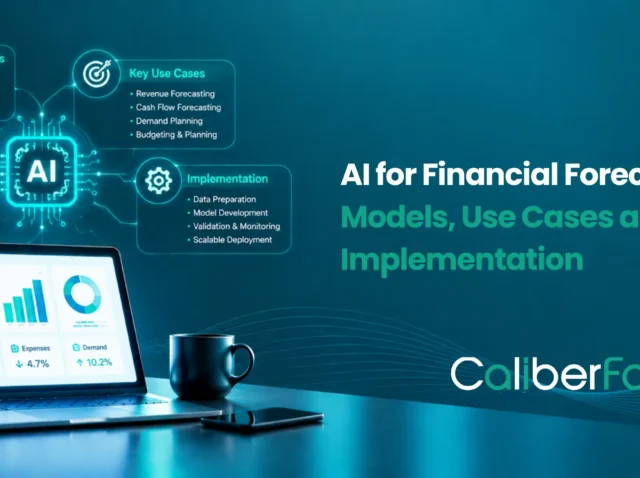
Financial forecasts influence hiring, spending, cash management, investment, capacity, and growth decisions. Yet the variables behind those forecasts rarely move independently. Revenue can shift with demand, pricing, customer behavior, sales performance, and market conditions, while costs respond to workforce, procurement, capacity,…
AI-Powered Application Development
Applications Where AI Is the
Product, Not the Feature
LLM-native applications, agent-embedded workflows, intelligent document systems, and AI-augmented enterprise tools, built by teams who engineer AI systems for production, not just prototype them for demos.
Adding an AI chat widget to your application is not AI-powered development.
Redesigning your workflows around intelligence is.
AI as a feature vs AI as the product
What AI-powered application development actually means?
The difference between adding an AI widget and redesigning your workflows around intelligence.
AI as a Feature:
- A chatbot widget added to an existing application
- A summarise button powered by an API call
- AI suggestions that users can choose to ignore
- The same workflows with an AI layer on top
- A demo that impresses and a product that underdelivers
AI as the Product:
- Workflows redesigned around what AI can do autonomously
- Intelligence embedded in every step where it creates value
- Decisions made by AI, exceptions escalated to humans
- Applications that improve as they process more data
- Production systems that users depend on to do their jobs
What we build?
Three AI-powered application capabilities
LLM-native applications, agent-embedded systems, and intelligent document platforms, built for production
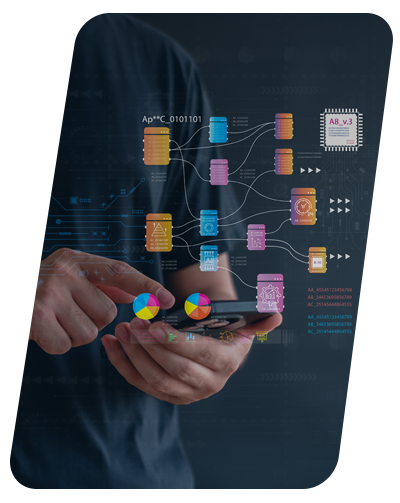
LLM-Native Application Development
Applications built from the ground up around large language model capabilities
LLM-native applications are not traditional software with an AI API bolted on. They are designed from the first architecture session around what LLMs do well, language understanding, generation, reasoning, and retrieval, with UI, workflows, data models, and backend services all shaped by how the AI layer works, not the other way around.
- Conversational enterprise applications: Natural language interfaces to ERP, EHR, CRM, and analytics platforms that understand context, complete tasks, and learn preferences
- RAG-powered knowledge applications: Enterprise knowledge bases, document Q&A systems, and policy search tools grounded in your documents with cited, accurate answers
- LLM workflow orchestration: Multi-step reasoning applications that decompose complex tasks, use tools, and produce structured outputs at each stage
- Prompt engineering and management systems: Versioned prompt libraries, A/B testing infrastructure, and regression testing to maintain LLM output quality over time
- Multi-modal AI applications: Applications that process text, images, documents, and audio together, clinical notes with lab images, invoices with tables, reports with charts
- LLM evaluation and quality pipelines: Automated accuracy, groundedness, and safety scoring embedded in every deployment pipeline to catch regressions before users do
Agent-Embedded Application Systems
Applications where AI agents execute operations alongside and instead of users
The most transformative enterprise applications in 2026 embed AI agents directly into operational workflows, not as standalone automation tools, but as first-class participants in the application’s UX and backend logic. Users approve, monitor, and override. Agents research, decide, execute, and report. The application is the interface where both work together.
- Human-agent collaboration interfaces: UX patterns for applications where AI agents handle routine operations and human users handle exceptions, approvals, and edge cases
- Agentic workflow engines: Application backends where AI agents complete multi-step tasks, call external tools, manage state, and return structured results
- Agent activity dashboards: Real-time visibility into what agents are doing, what they have completed, and what requires human attention, the operational control plane
- HITL escalation systems: Confidence-threshold-based human-in-the-loop workflows that route uncertain agent decisions to the right human reviewer automatically
- Agent performance monitoring: Accuracy tracking, task completion rates, escalation rates, and cost-per-operation dashboards for agent-embedded production applications
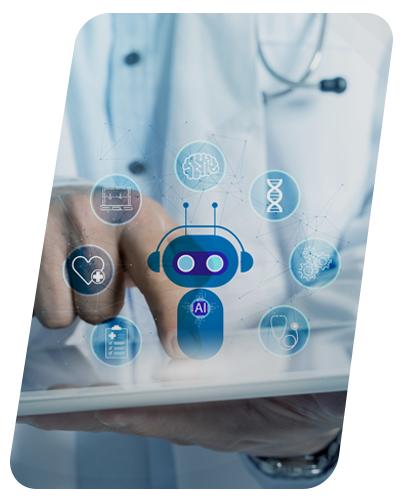

Intelligent Document & Process Applications
Applications that read, understand, and act on documents at enterprise scale
Documents are the interface between enterprises and the world, contracts, claims, clinical notes, invoices, applications, and reports. We build intelligent document processing applications that extract, classify, validate, and route document content autonomously, eliminating the manual data entry, review, and routing that consumes operational capacity.
- Intelligent document processing (IDP) platforms: End-to-end document ingestion, classification, extraction, validation, and routing applications replacing manual review workflows
- Clinical documentation AI: Ambient capture, NLP-powered SOAP note generation, ICD/CPT code suggestion, and EHR integration for clinical documentation reduction
- Contract intelligence applications: Contract extraction, clause classification, obligation tracking, and renewal management powered by LLMs and structured data models
- Claims and forms processing: Insurance claims, loan applications, grant submissions, and regulatory forms processed with AI extraction and business rule validation
- Medical record analysis tools: Patient chart summarisation, problem list extraction, medication reconciliation, and prior auth evidence compilation from unstructured records
- Compliance document automation: Regulatory submission preparation, audit response generation, and policy compliance checking against structured rule sets
The Architecture
AI application architecture, six layers
From intelligent interface to governance and safety. Every layer purpose-built for AI-native production applications.
Application Layer
What Gets Built Here
AI Interface Layer
Conversational UI, natural language search bars, intelligent forms, agent activity panels, and AI-generated content surfaces, the front-end UX designed around how AI creates value for users.
Orchestration Layer
LangChain, LlamaIndex, or custom orchestration logic, managing LLM calls, tool use, agent loops, context windows, memory, and multi-step reasoning chains behind the user interface.
AI Model Layer
LLM integrations (GPT-4o, Claude, Llama, Gemini), embedding models, CV models, and specialised domain models, selected, combined, and routed based on capability, latency, and cost requirements.
Knowledge & Memory Layer
Vector databases (Pinecone, Weaviate, Qdrant), document stores, episodic memory for agents, user preference storage, and retrieval pipelines that ground AI outputs in enterprise knowledge.
Integration Layer
Tool definitions, API connectors, EHR/ERP/CRM integrations, and event publishers that give AI agents and LLMs the ability to read and act on enterprise systems in real time.
Governance & Safety Layer
Output validation, hallucination detection guardrails, PII redaction, confidence scoring, audit logging, HITL escalation triggers, and cost monitoring, enterprise-safe AI operations from day one.
IMPACTRCM.AI · Live ai application spotlight
An AI-powered application running healthcare revenue cycle operations
ImpactRCM.AI is not a BI dashboard with AI features. It is an application where AI agents run coding, prior auth, denial management, and AR follow-up as first-class operational participants.
AI-native architecture
Agents and humans work side by side in the same workflow UI, each handling what they do best
98.6% billing compliance
Production accuracy in live healthcare RCM deployments, not a benchmark, a live result
15–25% AR days reduction
Measurable revenue cycle improvement delivered through AI-powered application workflows
Where this works?
Predictive AI in production, by industry
Healthcare & Clinical AI Apps
AI-assisted clinical documentation: Ambient capture, LLM SOAP note generation, and EHR write-back integration
Prior auth intelligence applications: Clinical evidence compilation, payer rule matching, and submission automation reducing auth turnaround from days to hours
Medical record summarisation tools: AI patient chart summaries, problem list extraction, and care gap identification for care management and population health teams
Clinical coding assistance applications: ICD/CPT code suggestions with confidence scores, documentation gap flagging, and query generation for coding teams
Financial Services AI Apps
Loan origination intelligence: AI document extraction, risk signal identification, and underwriting narrative generation accelerating decisioning from days to hours
Regulatory intelligence applications: AI-powered monitoring of regulatory updates, impact assessment, and policy update workflows for compliance teams
Contract and agreement analysis tools: Clause extraction, obligation identification, risk flagging, and renewal alert applications for legal and commercial teams
Financial research and analyst tools: LLM-powered research assistants that synthesise earnings, filings, and market data into structured analyst briefs
Enterprise Operations AI Apps
Intelligent operations command centres: AI surfaces exceptions, anomalies, and recommended actions from operational data streams for management teams
Knowledge management applications: Enterprise search and Q&A tools grounded in internal documentation, policies, and institutional knowledge
Customer service intelligence platforms: AI-powered resolution applications that understand intent, retrieve knowledge, and handle tier-1 queries autonomously
Employee productivity AI tools: AI writing assistants, meeting summarisers, project intelligence, and workflow automation tools built for internal enterprise deployment
What you can expect?
Outcomes from production AI applications
98.6%
Billing compliance accuracy in live AI-powered RCM applications
40%
Documentation time reduction via AI clinical workflow applications
65%
Process efficiency gains via CaliberX AI agent integration
70%
Manual workflow reduction in operational AI applications
The technology stack
Technologies we build AI applications with
| Layer | Technologies We Work With |
|---|---|
| LLM Providers | OpenAI GPT-4o · Anthropic Claude · Google Gemini · Azure OpenAI · Llama (self-hosted) |
| AI Frameworks | LangChain · LlamaIndex · Semantic Kernel · CrewAI · AutoGen · Haystack |
| Vector Databases | Pinecone · Weaviate · Qdrant · Chroma · pgvector · Azure AI Search |
| Document AI | Azure Document Intelligence · AWS Textract · Google Document AI · Tesseract · Unstructured.io |
| Application Backend | FastAPI · Node.js · .NET · Python (async) · PostgreSQL · Redis |
| AI Observability | LangSmith · Braintrust · TruLens · Arize Phoenix · Weights & Biases |
| Deployment | Docker · Kubernetes · AWS Lambda · Azure Container Apps · Cloud Run |
Why CaliberFocus?
What makes our AI application engineering different?
AI Engineering and App Engineering in One Team
Most development firms outsource AI to a data science team and build the application separately. At CaliberFocus, the team that designs the LLM integration also builds the application, no handoff gap, no integration friction, no production surprises.
Production AI, Not Prototype AI
We have live AI-powered applications running in production healthcare environments today, ImpactRCM.AI with 98.6% billing compliance. That production discipline is what every new AI application we build benefits from.
Governance and Safety as Architecture
Enterprise AI applications require output validation, hallucination guardrails, audit trails, and HITL escalation as core architectural components, not features added before launch. We design them in from the first session.
Domain Intelligence That Improves Accuracy
Healthcare RCM, financial services, and operations each have domain-specific prompt strategies, evaluation criteria, and failure modes. Our domain experts inform every AI application we build, reducing hallucination rates, improving accuracy, and accelerating adoption.
Connected services
The AI and Engineering Stack Behind Every Application
AI Agent Development
The autonomous agent systems embedded as first-class participants in AI-powered applications.
Generative AI & LLM Solutions
LLM fine-tuning, RAG systems, and GenAI infrastructure powering the application intelligence layer.
Custom Application Development
The full-stack engineering capability that builds the application around the AI layer.
MLOps & LLMOps
Keeping AI-powered application intelligence accurate, monitored, and production-reliable over time.
Ready to build an application where AI actually
runs the workflow?
Tell us the workflow you want to transform. We will design the AI application architecture that makes it production-ready.

Application innovation backed by deep engineering..

Measurable Results
50% reduction in technical debt for enterprise clients
True Partnership Model
Dedicated teams integrated with your workflow
Rapid Innovation Velocity
Ship features 3X faster with our DevSecOps pipeline
Enterprise-Grade Security
SOC 2 compliant engineering practices
Partnering for innovation & growth
We collaborate with global technology leaders to deliver secure and scalable growth-driven digital solutions. Our partnerships strengthen our ability to innovate, accelerate transformation, and drive measurable business impact for our clients.





What our clients say about our work?
When patient data was summarized clearly, documentation felt less burdensome. With CaliberFocus, clinician satisfaction rose from 58% to 81% without changing how teams work.
Dr. Rebecca HallCMIO, Healthcare
Better documentation and fewer audit issues delivered real savings. With CaliberFocus, billing compliance improved to 98.6%, reducing risk while easing the burden on clinicians.
Sophia WilliamsCTO, Clinical care
We gained clear visibility into student performance. Engagement rose, scores improved, and administrative effort dropped by nearly 30 percent, giving educators time to teach.
Andrew MillerDirector, Education Technology
Thoughts and Insights
Top Generative AI Development Companies Transforming Industries in 2026
Generative AI companies are no longer experimental vendors, they are becoming core technology partners for enterprises automating high-friction, knowledge-intensive workflows across industries. In enterprise contexts, generative AI development companies design and deploy domain-trained AI systems that automate workflows, augment decision-making, and…
Top 10 RAG Development Companies in 2026
What happens when your AI sounds confident and gets the facts wrong? It’s a situation many teams are running into. The model responds quickly, the tone is confident, but the facts don’t hold up. And when that happens in a business-critical…
Why choose CaliberFocus for AI-powered application development?
CaliberFocus delivers AI-powered application development services that help organizations build intelligent, production-ready applications where AI drives workflows, decisions, and automation. From LLM-native applications and AI agents to intelligent document systems and enterprise AI platforms, we engineer applications that combine advanced AI capabilities with secure, scalable, and business-focused architecture.
- AI-native applications designed around real business workflows
- Intelligent automation powered by LLMs, agents, and enterprise AI capabilities
- Production-ready AI systems built with governance, security, and scalability
- Domain-driven AI solutions that deliver measurable operational impact
Security & Compliance
