


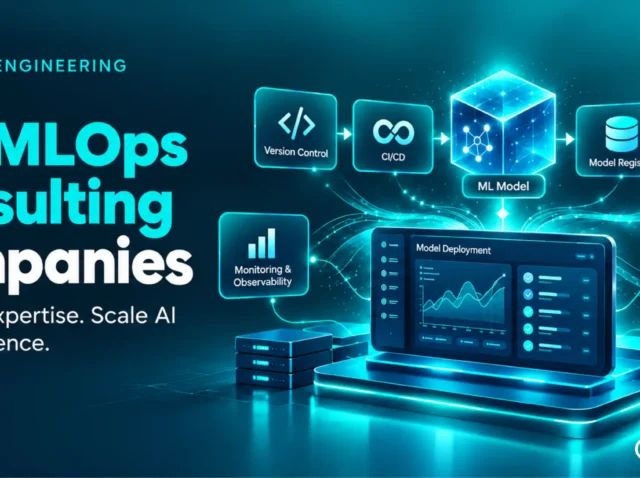
Machine learning is already helping enterprises predict equipment failures, identify fraudulent transactions, forecast demand, and improve operational decisions. But developing a machine learning model is only the beginning. The bigger challenge is keeping that model accurate, reliable, and useful as business…
Legacy Modernization
Turn Legacy Systems From
Anchor Into Advantage
Structured modernization that preserves the business logic your operations depend on, eliminates the technical debt that holds you back, and builds the platform that AI and modern applications actually require.
The most expensive technology decision you can make is keeping a legacy system that blocks everything else.
What legacy systems cost beyond the maintenance bill?
The direct cost of maintaining legacy systems is visible. The indirect cost, in blocked AI adoption, slow delivery, integration debt, and talent attrition, is where the real damage accumulates.
AI adoption blocked
Legacy systems produce data that AI cannot consume, unstructured, inaccessible, undocumented. Every AI initiative stalls at the data layer.
Delivery velocity destroyed
Every new feature requires understanding systems nobody fully understands anymore. Simple changes take months. Competitors move in weeks.
Talent and security risk
COBOL, VB6, and unsupported frameworks lose their engineers to retirement. Security patches stop. The risk compounds silently.
Modernisation is not a cost. It is the investment that makes every other technology investment worth making.
Choose the right strategy
Four modernisation strategies, when to use each
The right approach depends on the system’s condition, business criticality, and what you need it to become.
| Strategy | Use When | What We Do | Not Recommended For |
|---|---|---|---|
| Retain & Wrap
Risk: Lowest risk Timeline: Weeks |
Use when: The system works, integrations are stable, and the goal is to expose functionality to modern consumers without touching the core. | What we do: API wrappers, facade patterns, and integration middleware that give modern applications clean access to legacy functionality, without the risk of rewriting working code. | Not for: Systems with performance ceilings, security vulnerabilities, or architectures that block AI data access. |
| Re-Platform
Risk: Moderate risk Timeline: Months |
Use when: The application logic is sound but the infrastructure is outdated, on-premise servers, old databases, or unsupported frameworks creating operational and security risk. | What we do: Lift-and-shift with targeted infrastructure upgrades, cloud migration, database modernisation, containerisation, that reduce operational overhead without rewriting business logic. | Not for: Applications where the core logic itself is the constraint, where architecture must change to enable the business requirements. |
| Re-Architect Risk: Moderate-high risk Timeline: Months to year |
Use when: The system's architecture is the constraint, monolithic design preventing independent scaling, tightly coupled modules blocking change velocity, or data models incompatible with AI workloads. | What we do: Structured decomposition into microservices or modular components, data model redesign for AI readiness, API-first architecture, and cloud-native infrastructure, preserving proven business logic in a new technical foundation. | Not for: Systems where a commercial platform (Dynamics 365, Salesforce, SAP) would deliver the functionality faster and more cost-effectively than custom re-architecture. |
| Replace & Rebuild Risk: Highest risk, highest reward Timeline: 6–18 months |
Use when: The system is beyond recovery, undocumented, unsupported, or structurally incompatible with modern requirements. The cost of keeping it running exceeds the cost of replacing it. | What we do: Full replacement with a modern cloud-native application or commercial platform, executed in phases with parallel running, data migration, user training, and managed cutover. | Not for: Organisations without sufficient change management capability or risk tolerance, replacement demands careful programme management at every stage. |
What we do?
Three core modernisation capabilities
Assessment, code modernisation, and platform migration, structured for the risks each involves.
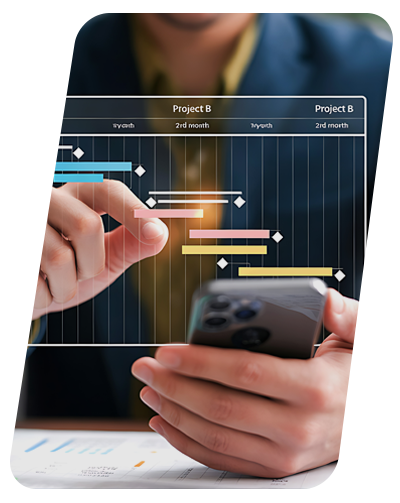
Application Assessment & Modernisation Roadmap
Know what you have, what it costs, and the right path forward
Most modernisation programmes fail not because the engineering was wrong, but because the assessment was incomplete. We conduct structured portfolio assessments that evaluate every legacy system against business criticality, technical health, modernisation options, and cost, producing a sequenced roadmap with honest risk and effort estimates.
- Legacy portfolio assessment: Full inventory of applications, dependencies, data flows, and integration points with technical health and business criticality scoring
- Total cost of ownership modelling: Maintenance cost, risk exposure, blocked initiative cost, and opportunity cost of deferral vs modernisation cost and timeline
- Modernisation strategy selection: Retain/wrap vs re-platform vs re-architect vs replace, with rationale documented for each system in the portfolio
- Dependency and integration mapping: Identify hidden dependencies, integration chains, and shared data models that affect sequencing and risk
- Phased modernisation roadmap: Sequenced 12/24/36-month plan with quick wins, risk milestones, and dependencies mapped across the portfolio
- Business case documentation: Investment requirements, expected returns, risk mitigation value, and executive presentation ready for board or leadership approval
Code Modernisation & Re-Architecture
Code Modernisation & Re-Architecture
The most dangerous approach to legacy modernisation is rewriting business logic from scratch. We use structured migration techniques, strangler fig pattern, anti-corruption layers, and phased decomposition, that preserve the organisational knowledge encoded in legacy systems while replacing the architectural constraints that make those systems expensive and slow.
- Strangler fig migration: Incrementally replace legacy functionality behind modern API facades while maintaining production operations throughout
- Monolith decomposition: Identify service boundaries, extract bounded contexts, and migrate to microservices architecture at the pace your organisation can absorb
- Legacy language migration: COBOL, VB6, .NET Framework, and legacy Java applications migrated to modern language equivalents with behaviour-preserving test suites
- Database modernisation: Oracle, SQL Server, and DB2 schema refactoring, query modernisation, and migration to cloud-native database services
- UI modernisation: Replace legacy web frameworks, thick-client desktop applications, and outdated interfaces with modern, responsive, accessible front-ends
- AI-readiness re-architecture: Restructure data models, add API layers, and implement event streaming to make legacy systems consumable by AI and analytics platforms
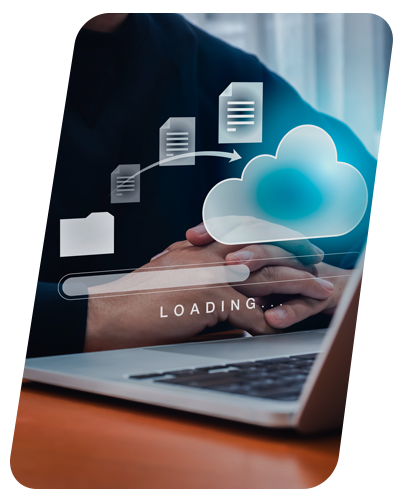

Platform Migration & Commercial System Transition
When the right answer is a commercial platform, not custom re-architecture
Not every legacy system should be re-architected. When commercial platforms like Dynamics 365, Salesforce, or ServiceNow deliver the required functionality faster and at lower total cost, migration to those platforms is the right strategic decision. We execute these transitions with the technical rigour and change management discipline that determines whether they deliver or disappoint.
- ERP migration to Dynamics 365: Structured migration from legacy ERP (SAP, Oracle, Sage, Infor) to Microsoft Dynamics 365 Finance and Supply Chain
- CRM platform migration: Migration from legacy CRM, homegrown customer systems, or Salesforce to Dynamics 365 Customer Engagement with data and process continuity
- Custom application to SaaS transition: Phased migration from expensive bespoke applications to commercial SaaS platforms with integration and customisation
- Data migration programme management: Full data cleansing, transformation, validation, and cutover management for large-scale enterprise system migrations
- Parallel running and cutover planning: Risk-managed dual operation of legacy and new systems during transition with rollback capability at each stage
- User adoption and change management: Training programmes, adoption tracking, and organisational change support that determine whether migrations stick
Where this works?
Legacy modernisation in production, by industry
Healthcare & Life Sciences
Legacy EHR and clinical system modernisation: API wrapper layer enabling AI integration with existing EHR systems without full replacement risk
On-premise healthcare application migration: Migration of clinical and billing applications, architected to support HIPAA obligations through the transition
Custom RCM system replacement: Transition from homegrown billing and AR applications to modern platforms integrating ImpactRCM.AI capabilities
Medical device software modernisation: Re-architecture of legacy medical device software for modern operating systems, security and connectivity, executed with the documentation and traceability your quality system requires
Financial Services
Core banking system modernisation: Strangler fig migration enabling modern API access to core banking functionality without big-bang replacement risk
Legacy reporting and compliance system re-architecture: Replace end-of-life reporting applications with platforms designed to meet current reporting and regulatory requirements
Mainframe workload migration: Structured migration of COBOL batch processing to modern cloud-native equivalents with validated functional equivalence
Custom trading system modernisation: Re-architecture of legacy trading and risk systems for low-latency requirements and modern API integration
Enterprise & Manufacturing
Legacy ERP migration to Dynamics 365: Structured migration from SAP, Oracle, Sage, or Infor to Dynamics 365 Finance and Supply Chain with data continuity
Manufacturing execution system modernisation: Re-architecture of legacy MES for IoT connectivity, real-time data streaming, and AI quality model integration
Custom workflow application replacement: Retire expensive bespoke workflow applications and migrate to modern platforms with integration and process continuity
End-of-life platform migration: Migrate applications from Windows Server 2012, SQL Server 2014, and unsupported frameworks before security risk materialises
What you can expect?
Outcomes from modernisation programmes
Numbers from live systems, not vendor projections
50%
Reduction in technical debt across a modernized enterprise application portfolio.
3×
Faster feature delivery following re-architecture.
40%
Infrastructure cost reduction after cloud re-platform.
Phased
Every migration runs with parallel operation and a rollback path at each stage.
Why CaliberFocus?
What makes our modernisation approach different ?
Honest Strategy First
We tell you which modernisation strategy is right for each system, including when the right answer is a commercial platform like Dynamics 365 rather than custom re-architecture. Our advice is not shaped by which engagement is larger.
Business Logic Preservation
The most dangerous mistake in modernisation is losing the institutional knowledge encoded in legacy systems. We use strangler fig patterns, anti-corruption layers, and behaviour-verified migration to preserve what works while replacing what does not.
AI-Readiness as a Design Criterion
Every modernisation we execute is designed with AI consumption in mind, clean APIs, structured data models, event streaming hooks, and governed data access. Modernised systems are AI-ready from the architecture stage
Programme Discipline That Delivers
Large-scale modernisation programmes fail on programme management, not engineering. We bring structured delivery frameworks, parallel running strategies, rollback planning, and change management capability that turn high-risk programmes into managed transitions.
Connected services
What modernisation unlocks?
Dynamics 365 Migration
When legacy ERP or CRM modernisation leads to a Dynamics 365 platform, our structured migration approach.
Cloud-Native & Platform Engineering
The cloud platform your modernised applications land on, containerised, scalable, and AI-ready.
API Development & System Integration
The API and integration layer that exposes modernized systems to the applications, partners and AI services that need them.
Data Engineering & Pipelines
Data pipelines built on newly accessible legacy data, unlocking AI and analytics that were previously blocked.
Ready to turn legacy systems into a
foundation for growth?
Start with an honest assessment. We will tell you what to keep, what to change, and the right way to do both.

Application innovation backed by deep engineering..
Measurable Results
50% reduction in technical debt for enterprise clients
True Partnership Model
Dedicated teams integrated with your workflow
Rapid Innovation Velocity
Ship features 3X faster with our DevSecOps pipeline
Enterprise-Grade Security
SOC 2 compliant engineering practices
Partnering for innovation & growth
We collaborate with global technology leaders to deliver secure and scalable growth-driven digital solutions. Our partnerships strengthen our ability to innovate, accelerate transformation, and drive measurable business impact for our clients.


What our clients say about our work?
When patient data was summarized clearly, documentation felt less burdensome. With CaliberFocus, clinician satisfaction rose from 58% to 81% without changing how teams work.
Dr. Rebecca HallCMIO, Healthcare
Better documentation and fewer audit issues delivered real savings. With CaliberFocus, billing compliance improved to 98.6%, reducing risk while easing the burden on clinicians.
Sophia WilliamsCTO, Clinical care
We gained clear visibility into student performance. Engagement rose, scores improved, and administrative effort dropped by nearly 30 percent, giving educators time to teach.
Andrew MillerDirector, Education Technology
Thoughts and Insights
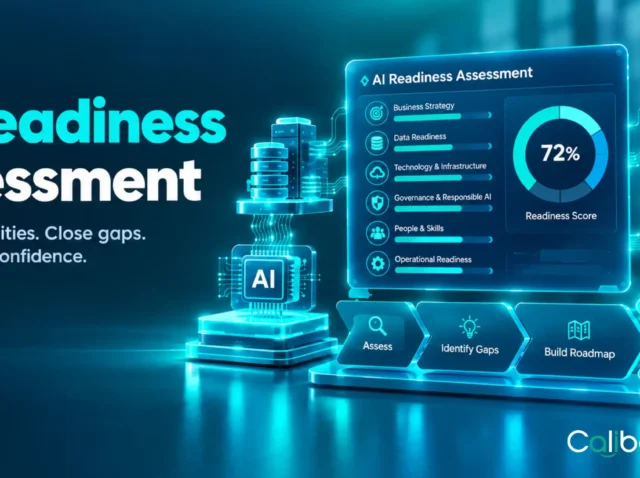
AI Readiness Assessment: Framework, Scoring and Enterprise Roadmap
An AI readiness assessment evaluates whether an organization has the business alignment, data, technology, governance, workforce capabilities, and operational processes required to implement AI successfully. It identifies capability gaps, deployment risks, and investment priorities before an enterprise commits to building or…
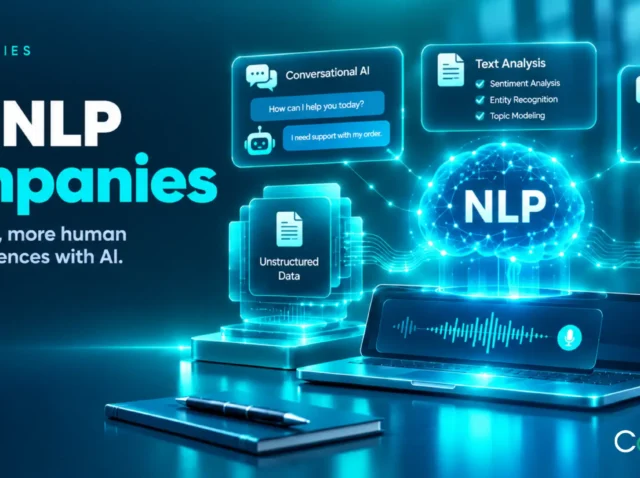
Top 10 Natural Language Processing Companies for Enterprise Solutions (2026)
Natural language processing (NLP) companies develop AI solutions that help enterprises extract, classify, interpret, and use information from documents, emails, customer conversations, service requests, and other language-based records. For businesses evaluating natural language processing companies, the priority is finding a provider…
Why choose CaliberFocus for legacy modernisation?
CaliberFocus delivers legacy modernisation services that help organizations transform outdated systems into scalable, secure, and AI-ready technology platforms. From application assessment and code modernization to cloud migration and platform transition, we modernize critical systems while preserving business logic, reducing technical debt, and enabling faster innovation.
- Strategic modernization approaches aligned with business goals
- Modern architectures built for scalability, security, and AI readiness
- Reduced technical debt with minimal operational disruption
- Future-ready platforms that accelerate digital transformation
Security & Compliance
