


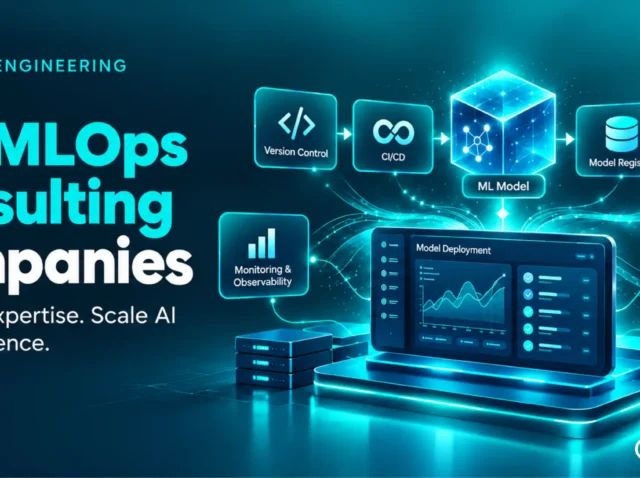
Machine learning is already helping enterprises predict equipment failures, identify fraudulent transactions, forecast demand, and improve operational decisions. But developing a machine learning model is only the beginning. The bigger challenge is keeping that model accurate, reliable, and useful as business…
Cloud-Native & Platform Engineering
Infrastructure That Scales With
Your Ambitions, Not Against Them.
Cloud-native architecture, container orchestration, and platform engineering, the foundation that makes every application scalable, resilient, and ready for AI workloads from day one.
The application you build is only as good as the platform it runs on.
What cloud-native architecture actually means?
Cloud-native is not moving your servers to the cloud. It is rearchitecting how your software is built, deployed, and scaled, so the platform works for your business, not against it.
Scale on demand
Platforms that scale up when load arrives and scale down when it passes, not over-provisioned and expensive 24/7 for peak capacity.
Deploy with confidence
CI/CD pipelines and container orchestration that make every deployment repeatable, safe, and reversible, not a high-risk manual event.
Ready for AI workloads
GPU instances, feature serving endpoints, LLM inference infrastructure, and real-time data pipelines require a platform built for them from the start.
What we build?
Three cloud-native platform engineering capabilities
Architecture, platform engineering, and cloud migration, each delivering the foundation your applications need.

Cloud-Native Application Architecture
Designed for elasticity, resilience, and operational simplicity
Cloud-native architecture is the set of design decisions that determine whether your application scales gracefully under load, recovers automatically from failure, deploys safely without downtime, and runs cost-efficiently at any scale. We make these decisions deliberately, at the architecture stage, not after the first production incident.
- Twelve-factor application design: Stateless services, environment-based configuration, and disposable infrastructure for predictable, scalable applications
- Kubernetes platform engineering: Cluster design, namespace strategy, RBAC, network policies, horizontal pod autoscaling, and cluster autoscaler configuration
- Service mesh implementation: Istio or Linkerd for service-to-service security, traffic management, observability, and canary deployment control
- Multi-cloud and hybrid architecture: Workload placement strategy, data residency compliance, and vendor portability for long-term platform flexibility
Platform Engineering & Developer Experience
Internal platforms that make your engineering team faster
Platform engineering is the discipline of building internal developer platforms (IDPs) that abstract infrastructure complexity from application teams, letting engineers focus on features, not on configuring cloud resources. We design and build internal platforms that standardise how applications are deployed, monitored, and operated across your engineering organisation.
- Internal developer platform (IDP) design: Golden path templates, self-service deployment workflows, and environment provisioning that reduce developer friction
- Infrastructure as Code: Terraform, Pulumi, and AWS CDK for versioned, reviewable, reproducible cloud infrastructure across all environments
- Platform service catalogue: Standardised shared services (auth, logging, secrets management, feature flags) that every application team can consume reliably
- Developer portal implementation: Backstage or custom portals with service catalogue, documentation, runbooks, and deployment workflows in one place
- GitOps workflows: ArgoCD and Flux-based continuous deployment with declarative infrastructure state, automated drift detection, and audit trails
- Cost governance and FinOps: Resource tagging, cost allocation dashboards, rightsizing recommendations, and budget alerting across cloud environments


Cloud Migration & Modernisation
Move to cloud with confidence, not just lift-and-shift
Cloud migration is only valuable when the result is a genuinely cloud-native platform, not the same architecture on rented servers. We execute cloud migrations that rearchitect applications for cloud-native patterns as they move, delivering the performance, scalability, and cost efficiency that cloud adoption is supposed to provide.
- Migration assessment and planning: Full application portfolio analysis, cloud-readiness scoring, and phased migration roadmap with risk and dependency mapping
- Lift-and-shift where appropriate: Fast, low-risk migration for stable workloads where architectural change is not the priority
- Re-platform to managed services: Migrate from self-managed databases, message queues, and caches to cloud-managed equivalents for reduced operational overhead
- Re-architect for cloud-native: Containerise, decompose, and redesign applications to take full advantage of cloud elasticity and managed platform services
- Database migration and modernisation: On-premise SQL Server, Oracle, and PostgreSQL to cloud-native equivalents with zero-downtime cutover strategies
- Cost optimisation post-migration: Reserved instance planning, spot instance strategies, architectural rightsizing, and waste elimination after initial migration
The platform architecture
Production cloud-native platform, six layers
From cloud foundation to observability. AI workloads as first-class citizens throughout.
Platform Layer
What Gets Built Here
Cloud Foundation
Landing zone design, account structure, networking (VPC, subnets, peering), IAM framework, and security baseline, the governed cloud foundation every workload runs inside
Container Platform
Kubernetes clusters (EKS, AKS, GKE), node group strategy, storage classes, ingress controllers, certificate management, and cluster lifecycle automation.
Application Platform
Deployment pipelines, Helm charts, GitOps workflows, environment promotion, feature flags, and blue/green deployment tooling, the standard path for every application team
Shared Services Layer
Authentication (OAuth, OIDC), secrets management (Vault, AWS Secrets Manager), distributed caching, message queuing, and API gateway, consumed by all applications.
AI & Data Platform
GPU node pools, model serving infrastructure, vector database endpoints, feature store connections, and real-time data pipeline access, AI workloads as first-class platform citizens.
Observability Platform
Centralised logging (ELK, CloudWatch), distributed tracing (Jaeger, X-Ray), metrics (Prometheus, Grafana), alerting, SLO tracking, and incident response workflows.
Cloud coverage
AWS, Azure, and GCP, we work across all three
Vendor-agnostic recommendations based on your workloads, compliance requirements, and existing investments.
Amazon Web Services
EKS · ECS · Lambda · RDS · Aurora · S3 · SQS · API Gateway · CloudFront · Cognito
Broadest managed service portfolio. Strong for organisations prioritising flexibility, open-source tooling, and multi-region deployments.
Microsoft Azure
AKS · Azure Functions · App Service · Azure SQL · Cosmos DB · Service Bus · APIM · Azure AD B2C
Strongest integration with Microsoft ecosystem, Dynamics 365, Office 365, Azure OpenAI, and Power Platform
Google Cloud Platform
GKE · Cloud Run · Cloud Functions · Cloud SQL · Spanner · Pub/Sub · Apigee · Firebase
Best-in-class Kubernetes (GKE Autopilot), Vertex AI integration, and serverless container runtime (Cloud Run).
Where this works?
Cloud-native platform engineering in production
Every regulated industry has distinct AI governance requirements. We know them.
Healthcare & Life Sciences
HIPAA-compliant Kubernetes platform: EKS or AKS with PHI data boundary controls, audit logging, encrypted storage, and BAA-ready infrastructure for clinical applications
Healthcare SaaS platform engineering: Multi-tenant AKS architecture with per-client namespace isolation, FHIR API gateway, and SOC2-compliant infrastructure
Clinical AI infrastructure: GPU node pools for model inference, FHIR data pipelines, and low-latency serving endpoints for real-time clinical decision support
EHR integration platform: Cloud-native middleware for HL7 FHIR, CDA, and X12 EDI processing with high availability and regulatory audit trails
Financial Services
PCI-DSS compliant cloud platform: Network segmentation, encryption at rest and in transit, access logging, and audit trail architecture for payment processing systems
Low-latency trading infrastructure: Optimised EKS configurations with node affinity, priority classes, and network tuning for sub-millisecond application response
Financial SaaS platform: Multi-tenant architecture with regulatory data residency controls, per-customer encryption keys, and SOC2 Type II-ready platform design
Core banking cloud migration: Phased migration from on-premise to AWS or Azure with zero-downtime cutover and comprehensive rollback planning
Enterprise SaaS & Product
SaaS platform engineering: Multi-tenant Kubernetes with namespace-per-tenant isolation, usage-based billing infrastructure, and horizontal scaling for enterprise customers
Internal developer platform: Golden path templates, self-service environment provisioning, and developer portal that reduced deployment time from days to hours
Platform migration: Lift-and-rearchitect from VM-based monolith to containerised microservices with CI/CD and auto-scaling
AI-native platform design: GPU-enabled Kubernetes with model serving sidecars, feature store integration, and LLM inference endpoints as platform-standard services
What you can expect?
Outcomes from cloud-native platform projects
40%
Infrastructure cost reduction after cloud-native rearchitecture
99.9%
Platform uptime for production Kubernetes environments
10×
Faster deployment frequency with CI/CD and GitOps pipelines
Zero
Downtime deployments with blue/green and canary strategies
The ToolChain
Tools & technologies we work with
The complete cloud-native stack from Kubernetes to developer platforms.
| Domain | Tools & Platforms |
|---|---|
| Container Orchestration | Kubernetes · EKS · AKS · GKE · OpenShift · Rancher |
| Infrastructure as Code | Terraform · Pulumi · AWS CDK · Bicep · Crossplane |
| CI/CD & GitOps | GitHub Actions · ArgoCD · Flux · Tekton · GitLab CI · Azure DevOps |
| Service Mesh | Istio · Linkerd · Consul · AWS App Mesh |
| Observability | Prometheus · Grafana · Jaeger · OpenTelemetry · Datadog · New Relic |
| Secrets & Security | HashiCorp Vault · AWS Secrets Manager · Azure Key Vault · OPA · Falco |
| Developer Platform | Backstage · Port · Cortex · Humanitec · Internal Platform (custom) |
Why CaliberFocus?
What makes our platform engineering different?
AI Platform Engineering as a Core Skill
We design cloud platforms where AI workloads are first-class citizens, GPU node pools, feature store endpoints, model serving infrastructure, and LLM inference capacity built into the platform architecture from the start, not added when the data science team asks.
Security and Compliance by Architecture
HIPAA, PCI-DSS, and SOC2 requirements are architecture inputs on every platform we design. Network boundaries, encryption, access controls, and audit logging are designed in, not compliance-checked at the end.
Platform Engineering, Not Just DevOps
We build platforms that make your engineering team faster, not just infrastructure that keeps applications running. Developer experience, self-service provisioning, and standardised deployment paths reduce cognitive load and accelerate feature delivery.
Economics Built Into Every Decision
Cloud spend is a product of architecture decisions made on day one. We model cost alongside performance and scalability in every architecture session, reserved instances, spot strategies, rightsizing, and storage tiering are built into the design, not reviewed at the first AWS bill.

Connected services
What runs on this platform?
DevOps, CI/CD & Cloud Infrastructure
Deployment pipelines, infrastructure automation, and continuous delivery running on this platform.
AI Engineering & Platform
LLM inference, model serving, and AI workload infrastructure as a platform-level capability.
Microservices & Event-Driven Architecture
Application architecture patterns that run on the cloud-native platform we build.
Custom Application Development
The applications deployed and scaled on the cloud-native platform we engineer
Ready to build a platform your applications
can grow into?
The platform decisions you make today determine what your applications can do in three years. Let’s make them deliberately.

Application innovation backed by deep engineering..

Measurable Results
50% reduction in technical debt for enterprise clients
True Partnership Model
Dedicated teams integrated with your workflow
Rapid Innovation Velocity
Ship features 3X faster with our DevSecOps pipeline
Enterprise-Grade Security
SOC 2 compliant engineering practices
Partnering for innovation & growth
We collaborate with global technology leaders to deliver secure and scalable growth-driven digital solutions. Our partnerships strengthen our ability to innovate, accelerate transformation, and drive measurable business impact for our clients.





What our clients say about our work?
When patient data was summarized clearly, documentation felt less burdensome. With CaliberFocus, clinician satisfaction rose from 58% to 81% without changing how teams work.
Dr. Rebecca HallCMIO, Healthcare
Better documentation and fewer audit issues delivered real savings. With CaliberFocus, billing compliance improved to 98.6%, reducing risk while easing the burden on clinicians.
Sophia WilliamsCTO, Clinical care
We gained clear visibility into student performance. Engagement rose, scores improved, and administrative effort dropped by nearly 30 percent, giving educators time to teach.
Andrew MillerDirector, Education Technology
Thoughts and Insights
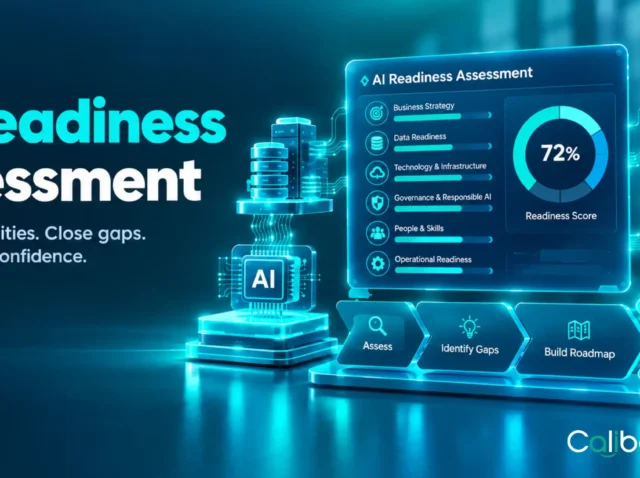
AI Readiness Assessment: Framework, Scoring and Enterprise Roadmap
An AI readiness assessment evaluates whether an organization has the business alignment, data, technology, governance, workforce capabilities, and operational processes required to implement AI successfully. It identifies capability gaps, deployment risks, and investment priorities before an enterprise commits to building or…
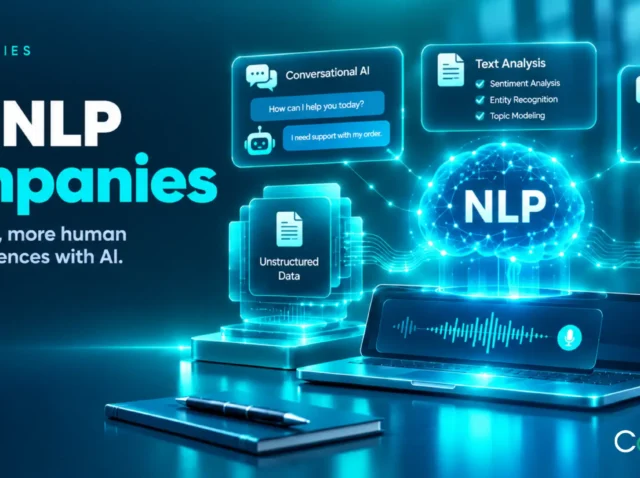
Top 10 Natural Language Processing Companies for Enterprise Solutions (2026)
Natural language processing (NLP) companies develop AI solutions that help enterprises extract, classify, interpret, and use information from documents, emails, customer conversations, service requests, and other language-based records. For businesses evaluating natural language processing companies, the priority is finding a provider…
Why choose CaliberFocus for cloud-native & platform engineering?
CaliberFocus delivers cloud-native platform engineering services that help organizations build scalable, secure, and AI-ready infrastructure. From cloud architecture and Kubernetes engineering to platform modernization and DevOps automation, we design platforms that improve reliability, deployment speed, and long-term operational efficiency.
- Scalable cloud-native architectures built for growth
- AI-ready platforms with modern infrastructure foundations
- Automated DevOps, CI/CD, and deployment workflows
- Secure, resilient platforms engineered for production
Security & Compliance
