


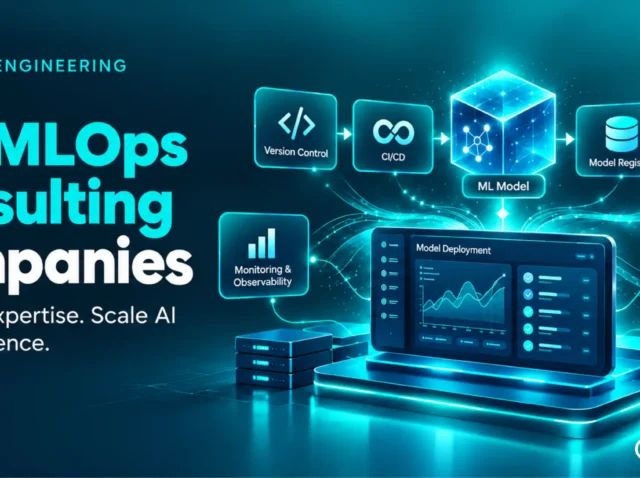
Machine learning is already helping enterprises predict equipment failures, identify fraudulent transactions, forecast demand, and improve operational decisions. But developing a machine learning model is only the beginning. The bigger challenge is keeping that model accurate, reliable, and useful as business…
API Development & System Integration
Enterprise Systems That Talk to
Each Other, and to Your AI
Production-grade APIs, enterprise integration architecture, and event-driven connectivity. The layer that connects every application, data platform, and AI system across your enterprise into one governed whole.
Disconnected systems are not a technology problem. They show up as manual re-entry, delayed decisions,
and AI that cannot reach the data it needs.
and AI that cannot reach the data it needs.
What disconnected enterprise systems actually cost?
Most enterprises run 50–200 different software systems. Without integration architecture, data moves between them by hand: slowly, inconsistently, and error-prone.
Manual re-entry and error
Staff re-keying data between EHR, billing, and CRM systems, introducing errors, wasting time, and creating audit trail gaps.
AI blocked at the boundary
AI systems cannot access data locked in systems with no API. Integration is the prerequisite for every AI and analytics initiative.
Point-to-point spaghetti
Dozens of direct system-to-system connections, each built differently, undocumented, and one system change away from breaking silently.
Well-designed integration architecture solves all three and pays for itself through the AI and automation it unlocks.
What we build?
Three API & integration capabilities
API design, enterprise integration architecture, and AI connectivity, built to production governance standards.
API Design & Development
APIs engineered as products: versioned, governed, and built to last
An API is a contract between systems. When it is designed poorly, every system that depends on it carries the technical debt of that decision for years. We design and build APIs with the same engineering discipline as production applications, with versioning, authentication, rate limiting, documentation, and testing standards that make them reliable interfaces for internal teams, partners, and AI systems.
- RESTful API design: Resource-oriented API architecture with OpenAPI 3.0 specifications, consistent error handling, and hypermedia controls
- GraphQL API development: Flexible query APIs for complex data models, federated GraphQL for microservices, and subscription support for real-time data
- gRPC and async API development: High-performance internal service communication and event-driven API design using AsyncAPI specification
- API versioning and lifecycle management: Backward-compatible versioning strategies, deprecation workflows, and consumer communication protocols
- API security engineering: OAuth 2.0, OpenID Connect, JWT, mTLS, API key management, rate limiting, and input validation at every endpoint
- API documentation and developer experience: OpenAPI-generated interactive documentation, SDK generation, and onboarding guides for internal and external consumers
Enterprise Integration Architecture
Replacing point-to-point spaghetti with governed integration fabric
Enterprise integration is not connecting two systems. It is designing the connective architecture that allows every system in the enterprise to exchange data reliably, with appropriate governance, in a way that does not create brittle dependencies. We design and implement enterprise integration architectures that are maintainable, monitorable, and extensible as the enterprise landscape evolves.
- Enterprise Service Bus (ESB) and iPaaS: MuleSoft, Azure Integration Services, AWS EventBridge, and Dell Boomi for centralised integration governance
- ERP integration patterns: Dynamics 365, SAP, Oracle, and Sage integrations with EHR, CRM, WMS, and custom applications via standardised connectors
- Healthcare interoperability: HL7 FHIR, SMART on FHIR, X12 EDI, and CDA integration between EHR, billing, payer, and analytics systems
- Event-driven integration: Kafka, Azure Service Bus, and AWS SNS/SQS architectures that decouple systems and enable real-time event propagation
- API gateway and management: Kong, Azure APIM, AWS API Gateway, and Apigee for centralised API traffic management, security, and observability
- Integration monitoring and governance: Centralised visibility into integration health, message volumes, error rates, and SLA compliance across the estate


AI & Data System Connectivity
The integration layer that makes AI systems operational
AI systems require a different kind of integration, real-time data access, bidirectional tool calling, event-triggered agent activation, and structured output delivery back into operational systems. We design the integration architecture that connects AI models, agents, and analytics platforms to the enterprise systems they need to read from and write to in production.
- AI tool integrations: Structured API connectors that give LLMs and AI agents the ability to read records, update systems, and trigger workflows in EHR, ERP, and CRM
- Real-time data feeds for AI: Change data capture (CDC), webhooks, and streaming integrations that give AI models and agents current data at inference time
- Bidirectional EHR integration: FHIR-compliant read and write operations enabling AI-generated clinical documentation, coding suggestions, and care alerts to be written back to EHR
- Payer API connectivity: Eligibility verification, prior auth submission, claims status, and ERA retrieval integrations with major payer portals and clearinghouses
- Analytics and AI pipeline connectors: Structured data extracts, event streams, and API feeds from operational systems into data platforms and ML feature stores
- Webhook and notification infrastructure: Event-driven notification systems that push AI and analytics outputs back into operational workflows and user-facing applications
The Architecture
Enterprise integration architecture, six layers
From source systems to AI and analytics consumption. Governed, observable, and extensible.
Integration Layer
What Gets Built Here
Source Systems
EHR, ERP, CRM, WMS, legacy applications, payer portals, and third-party SaaS, the systems that own data and need to share it. Each connected via the most appropriate pattern for its capabilities and constraints.
Integration Platform
iPaaS, API gateway, ESB, or event broker, the governed middleware layer that routes, transforms, and delivers data between systems without creating direct dependencies.
Data & Event Bus
Kafka, Azure Service Bus, or AWS EventBridge, the event streaming layer that decouples producers from consumers and enables real-time event propagation across the enterprise.
API Management Layer
API gateway, developer portal, rate limiting, authentication, usage analytics, and versioning controls. The governance layer for every API exposed internally and externally.
AI & Analytics Layer
The consumption layer where AI models, agents, data pipelines, and analytics platforms access enterprise data through governed APIs and event streams.
Observability Layer
Integration health monitoring, message volume dashboards, error rate alerting, SLA tracking, and distributed tracing across the complete integration estate.
Where this works?
API & integration in production, by industry
Healthcare & RCM
EHR to billing platform integration: HL7 FHIR-compliant bidirectional HL7 FHIR integration between electronic health record systems and billing or RCM platforms, with an AI coding layer in between, where platform partner access permits
Payer connectivity: Eligibility, prior auth, claims status, ERA, and remittance integrations with major payers and clearinghouses for automated RCM workflows
Clinical data platform APIs :FHIR R4 APIs exposing patient data to analytics, AI, and population health platforms with access controls designed to support HIPAA requirements
Healthcare system consolidation: Integration architecture connecting acquisitions, separate EHRs, billing systems, and clinical tools, into a unified data and workflow layer
Financial Services
Core banking API layer: API wrapper and integration middleware enabling modern channel applications to access core banking data without direct system coupling
Open banking compliance: PSD2, FDX, and Open Banking API implementation for account data sharing, payment initiation, and third-party access
Trading system integration: Market data, order management, and risk system connectivity with low-latency requirements and message delivery guarantees
Regulatory reporting integration: Automated data extraction and submission integrations for regulatory reporting across multiple jurisdictions and formats
Enterprise & Dynamics 365
Dynamics 365 integration hub: Connecting D365 Finance, CE, Supply Chain, and Business Central with ERP, WMS, e-commerce, and custom applications via Power Platform connectors
ERP-to-WMS integration: Real-time inventory, order, and shipment data synchronisation between ERP and warehouse management systems eliminating manual reconciliation
CRM and marketing platform connectivity: Bi-directional customer and opportunity data synchronisation between Dynamics 365 CE, marketing automation, and customer data platforms
AI agent tool integrations: Structured API connectors enabling AI agents to read, update, and trigger workflows in Dynamics 365 and connected operational systems
What you can expect?
Outcomes from production integration architecture
70%
Reduction in manual data re-entry after integration automation.
60%
Fewer integration failures under governed architecture than point-to-point.
3×
Faster AI deployment where integration prerequisites are already in place.
Monitored
Every production integration ships with health monitoring, error alerting and distributed tracing from day one.
The toolchain
Tools & platforms we work with
The complete enterprise integration stack: from iPaaS to event streaming to API governance.
| Domain | Tools & Platforms |
|---|---|
| iPaaS & ESB | MuleSoft · Azure Integration Services · AWS EventBridge · Dell Boomi · Workato |
| API Gateway | Kong · Azure API Management · AWS API Gateway · Apigee · Nginx |
| Event Streaming | Apache Kafka · Azure Service Bus · AWS SNS/SQS · RabbitMQ · Google Pub/Sub |
| Healthcare Standards | HL7 FHIR R4 · SMART on FHIR · X12 EDI · CDA · Direct Messaging |
| API Frameworks | FastAPI · Express.js · ASP.NET Core · Spring Boot · Go (net/http) |
| Identity & Security | OAuth 2.0 · OpenID Connect · Azure AD · Auth0 · AWS Cognito · mTLS |
| Monitoring & Tracing | Datadog · Dynatrace · OpenTelemetry · Jaeger · AWS X-Ray · Azure Monitor |
Why CaliberFocus?
What makes our integration engineering different?
AI Integration as a Core Competency
We design integration architecture with AI consumption in mind from the start, real-time data feeds, tool call APIs for agents, CDC streams for ML feature stores, and bidirectional write-back integrations for AI-generated outputs. Integration built for 2026, not 2016.
Healthcare Interoperability Depth
HL7 FHIR, X12 EDI, payer portal connectivity, and EHR deep integration are not things our team learns per-project. Our team writes X12 and FHIR integrations as a matter of routine rather than as a research exercise. That shows up as shorter discovery, fewer mapping errors, and integration programs that reach production without a second attempt.
Governance as Architecture Standard
We design integration with governance from the start, centralised API management, integration health monitoring, access controls, and audit trails. Integration estates that are visible, manageable, and extensible rather than sprawling and fragile.
Data and Application Integration Together
Integration sits between the data platform and the applications that depend on it. Our data engineers and application engineers work on the same integration architecture rather than handing it across a boundary, which is where most integration programs lose time.
Connected services
What integration architecture enables?
Integration is the prerequisite. These are the capabilities it unlocks.
Data Engineering & Pipelines
Data pipelines that consume APIs and integration events to build analytics-ready data platforms.
Real-Time Data Streaming
Kafka and event streaming infrastructure that the integration layer publishes events to, and that downstream systems consume in real time.
AI Agent Development
AI agents that use integration APIs as tools; reading records, updating systems, triggering workflows.
Dynamics 365 Consulting
Dynamics 365 integration strategy and connected ecosystem design across the Microsoft platform, from Power Platform connectors to ERP and CRM data flows.
Ready to connect your enterprise, and unlock your AI?
Show us the systems that need to talk. We will design the integration architecture that makes it happen safely.

Application innovation backed by deep engineering..

Measurable Results
50% reduction in technical debt for enterprise clients
True Partnership Model
Dedicated teams integrated with your workflow
Rapid Innovation Velocity
Ship features 3X faster with our DevSecOps pipeline
Enterprise-Grade Security
SOC 2 compliant engineering practices
Partnering for innovation & growth
We collaborate with global technology leaders to deliver secure and scalable growth-driven digital solutions. Our partnerships strengthen our ability to innovate, accelerate transformation, and drive measurable business impact for our clients.





What our clients say about our work?
When patient data was summarized clearly, documentation felt less burdensome. With CaliberFocus, clinician satisfaction rose from 58% to 81% without changing how teams work.
Dr. Rebecca HallCMIO, Healthcare
Better documentation and fewer audit issues delivered real savings. With CaliberFocus, billing compliance improved to 98.6%, reducing risk while easing the burden on clinicians.
Sophia WilliamsCTO, Clinical care
We gained clear visibility into student performance. Engagement rose, scores improved, and administrative effort dropped by nearly 30 percent, giving educators time to teach.
Andrew MillerDirector, Education Technology
Thoughts and Insights
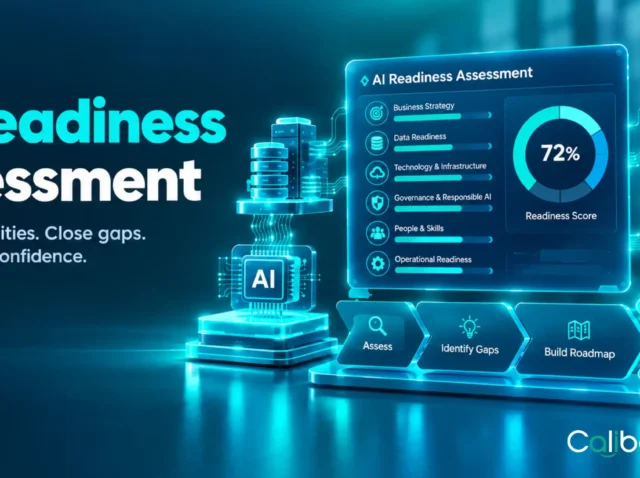
AI Readiness Assessment: Framework, Scoring and Enterprise Roadmap
An AI readiness assessment evaluates whether an organization has the business alignment, data, technology, governance, workforce capabilities, and operational processes required to implement AI successfully. It identifies capability gaps, deployment risks, and investment priorities before an enterprise commits to building or…
Top 10 Natural Language Processing Companies for Enterprise Solutions (2026)
Natural language processing (NLP) companies develop AI solutions that help enterprises extract, classify, interpret, and use information from documents, emails, customer conversations, service requests, and other language-based records. For businesses evaluating natural language processing companies, the priority is finding a provider…
Why choose CaliberFocus for API development & system integration?
CaliberFocus delivers API development and system integration services that help organizations connect applications, data platforms, and AI systems through secure, scalable, and governed integration architectures. From enterprise APIs and event-driven integrations to AI-ready connectivity, we build integration layers that improve operational efficiency, accelerate automation, and enable seamless data flow across the enterprise.
- Enterprise-grade APIs designed for reliability, security, and long-term scalability
- Modern integration architectures that reduce complexity and eliminate system silos
- AI-ready connectivity that enables intelligent automation and real-time decision-making
- Robust governance and monitoring for dependable enterprise operations
Security & Compliance
