
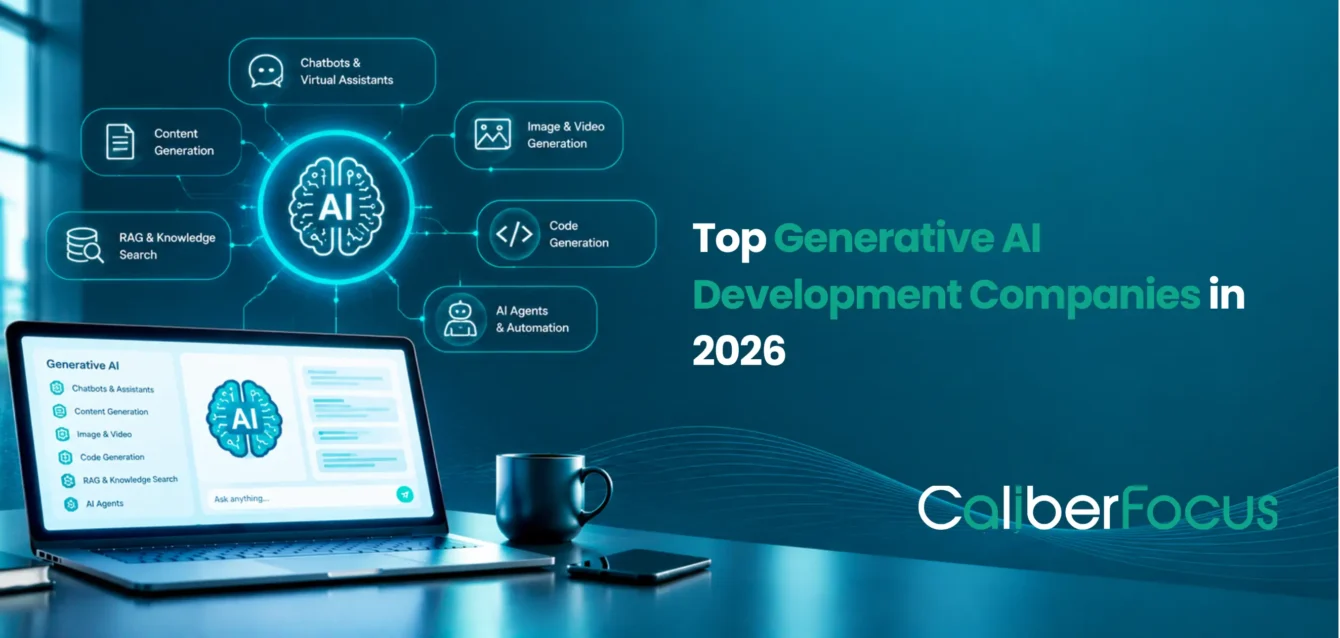
Businesses are increasingly evaluating Generative AI development companies when AI needs to work with their own data, applications, knowledge and operational workflows rather than remain a standalone productivity tool.
The requirement may be an enterprise knowledge assistant that retrieves information from internal sources, an AI copilot embedded within a business application, an intelligent document workflow, a customer-service system, or an AI agent that can work across multiple applications.
Generative AI Development Companies
The right provider should connect GenAI capabilities with the business workflow, enterprise data and technology environment it needs to support.
Custom GenAI applications, LLM integration, RAG, AI agents, enterprise copilots, and AI-powered workflows.
SMBs and enterprises that need AI connected to proprietary data, existing applications, or business processes.
GenAI engineering, enterprise integration, data connectivity, AI agents, security, evaluation, deployment, and ongoing operations.
Enterprise knowledge assistants, document processing, customer support, workflow automation, decision support, and AI-enabled products.
Business understanding, technical expertise, integration capability, production readiness, delivery approach, and post-launch support.
The right provider is not simply the one with the most AI services, but the one that can translate a specific business requirement into a reliable, integrated, production-ready GenAI solution.
Where Custom Generative AI Fits
| Business Need | How Custom Generative AI Can Assist |
| Enterprise Knowledge | Search, retrieve and synthesize information across documents and knowledge sources |
| Business Applications | Embed copilots and GenAI capabilities within existing or new applications |
| Document-Heavy Work | Extract, summarize, compare, classify and generate information |
| Customer Operations | Support conversations, response generation, service workflows and knowledge access |
| Employee Productivity | Assist research, drafting, internal search and knowledge-intensive tasks |
| Operational Workflows | Use AI agents to interpret information, invoke tools and coordinate multi-step activities |
| Software Products | Build customer-facing or internal products with embedded GenAI functionality |
| Decision Support | Bring relevant information together to support analysis and human decisions |
Delivering these Generative AI development solutions can require more than connecting an application to an LLM. Depending on the requirement, a Generative AI and LLM development company may need to combine RAG, model integration or customization, AI agents, enterprise data, APIs, application engineering, evaluation and production deployment.
For businesses comparing providers, integration capability is particularly important when GenAI must operate within existing applications, data environments and business processes rather than as an isolated AI interface.
What This Guide Helps You Determine
For SMBs and enterprises comparing Generative AI development companies in 2026, this guide addresses three practical questions:
- Which GenAI development companies should be considered?
- What Generative AI development services and capabilities differentiate these providers?
- Which company is better aligned with the GenAI system, enterprise environment and delivery requirements of the business?
Generative AI Development Companies at a Glance
The right Generative AI development company depends on what needs to be built, where GenAI needs to operate, and how deeply it must integrate with existing business systems. Some providers concentrate on custom LLM applications and RAG, while others bring broader capabilities across AI agents, application engineering, data integration and production deployment.
The companies covered in this guide represent different combinations of these capabilities.
| Company | Generative AI Focus | Relevant Capabilities | Best Fit |
|---|---|---|---|
| CaliberFocus | Enterprise GenAI and LLM solutions | RAG, AI agents, LLM applications, AI engineering, enterprise integration | Organizations integrating GenAI into business applications, knowledge and workflows |
| Algoworks | AI-enabled digital solutions | GenAI development, AI/ML, application development, cloud | Organizations combining AI initiatives with broader digital engineering |
| LeewayHertz | Generative AI development | Custom GenAI, RAG, AI agents, LLM development | Businesses building custom GenAI applications and AI-driven workflows |
| Markovate | AI product development | Generative AI, AI agents, LLM applications, product engineering | Organizations developing AI-enabled digital products |
| Xicom | AI and software development | GenAI applications, AI/ML, custom software | Businesses combining GenAI development with custom application requirements |
| SoluLab | Generative AI and AI development | LLM applications, AI agents, RAG, custom AI solutions | Organizations evaluating a broad AI development partner |
| Azilen Technologies | Product engineering and AI | GenAI, software product engineering, data and cloud | Product companies integrating GenAI into software platforms |
| Prismetric | AI application development | Generative AI, AI/ML, mobile and web applications | Businesses developing GenAI-enabled digital applications |
| ELEKS | Enterprise software and AI engineering | AI consulting, GenAI, data engineering, software development | Enterprises combining AI initiatives with complex software environments |
| Rapid Innovation | AI development | Generative AI, LLMs, RAG, AI agents | Businesses pursuing custom AI applications and automation |
| Amplework | AI and application development | Generative AI, AI agents, application engineering | Organizations building AI-enabled applications and workflows |
| Blocktech Brew | AI product development | GenAI applications, AI agents, custom software | Businesses developing AI-enabled products and applications |
| NexureIQ | AI solutions and automation | Generative AI, AI agents, workflow automation | Organizations applying AI to operational and automation use cases |
Top Generative AI Development Companies in 2026
- CaliberFocus
- Algoscale
- LeewayHertz
- Markovate
- Xicom
- SoluLab
- Azilen Technologies
- Prismetric
- ELEKS
- Rapid Innovation
- AmpleWork Software
- BlockTech Brew
- NexureIQ
1. CaliberFocus
Focused on: Enterprise Generative AI and LLM development integrated with business applications, data, knowledge and operational workflows.
Best fit for: SMBs and enterprises that need custom GenAI solutions connected to existing systems rather than standalone AI tools or isolated proofs of concept.
Generative AI capabilities:
- Custom Generative AI application development
- LLM integration and development
- RAG and enterprise knowledge systems
- AI agent development
- GenAI-enabled application development
- Enterprise data and API integration
- AI engineering and production deployment
- LLMOps and ongoing model operations
Why SMBs choose CaliberFocus:
SMBs may have a clear GenAI opportunity without maintaining dedicated teams across AI engineering, data, application development and integration. CaliberFocus brings these capabilities together to help businesses develop GenAI solutions around specific workflows, proprietary knowledge and existing technology environments, with a path from use-case definition through implementation and production operations.
Where Generative AI Meets Business Operations
Build GenAI into workflows that retrieve business knowledge, interpret documents, generate task-specific outputs, trigger application actions and coordinate work across connected systems.
2. Algoscale
Focused on: Generative AI development supported by data engineering, analytics and machine learning capabilities.
Best fit for: Businesses that need GenAI applications built around data-intensive use cases, analytics environments or existing data infrastructure.
Generative AI capabilities:
- Custom Generative AI development
- LLM-powered applications
- RAG solutions
- AI and machine learning development
- Data engineering and analytics
- AI integration
Why SMBs choose Algoscale:
Relevant for SMBs that want to combine GenAI development with the data engineering and analytics work required to make business data usable within AI applications.
3. LeewayHertz
Focused on: Custom Generative AI development across LLM applications, RAG, AI agents and enterprise AI systems.
Best fit for: Businesses looking for a dedicated AI development provider covering multiple GenAI architectures and use cases.
Generative AI capabilities:
- Custom GenAI applications
- LLM development and integration
- RAG development
- AI agent development
- Enterprise AI solutions
- Model customization
Why SMBs choose LeewayHertz:
Its broad AI development portfolio can suit SMBs that want one provider capable of addressing different GenAI requirements as their use cases expand.
4. Markovate
Focused on: Generative AI product development and AI-enabled digital applications.
Best fit for: Businesses developing new AI products or adding GenAI functionality to existing customer-facing and internal applications.
Generative AI capabilities:
- Generative AI application development
- LLM-powered solutions
- AI agent development
- AI product engineering
- Custom AI development
- Application integration
Why SMBs choose Markovate:
Its combination of AI and product engineering can suit SMBs that need to turn a GenAI concept into a functional digital product rather than develop the AI component in isolation.
5. Xicom
Focused on: Generative AI development combined with custom software and application engineering.
Best fit for: Businesses that need GenAI capabilities developed as part of a broader web, mobile or custom software initiative.
Generative AI capabilities:
- Generative AI applications
- AI and ML development
- Custom AI solutions
- Application development
- AI integration
- Software engineering
Why SMBs choose Xicom:
SMBs with both software development and AI requirements can consolidate those needs with a provider that works across application engineering and GenAI.
6. SoluLab
Focused on: Generative AI development across LLM applications, RAG, AI agents and custom AI solutions.
Best fit for: Organizations comparing a broad AI development partner for conversational AI, knowledge systems, agents or custom GenAI applications.
Generative AI capabilities:
- Custom Generative AI development
- LLM applications
- RAG development
- AI agents
- Conversational AI
- AI integration
Why SMBs choose SoluLab:
Its range of GenAI services gives SMBs flexibility to evaluate different implementation approaches without limiting the engagement to one type of AI application.
7. Azilen Technologies
Focused on: Generative AI within software product engineering and digital product development.
Best fit for: SaaS and technology businesses introducing GenAI capabilities into existing or new software products.
Generative AI capabilities:
- Generative AI engineering
- AI-enabled product development
- LLM integration
- Data engineering
- Cloud engineering
- Software product development
Why SMBs choose Azilen Technologies:
The product-engineering orientation can suit growing software businesses that need GenAI functionality developed alongside the architecture and application surrounding it.
8. Prismetric
Focused on: Generative AI and AI/ML development for web and mobile applications.
Best fit for: Businesses building digital applications where GenAI functionality forms part of the user experience.
Generative AI capabilities:
- Generative AI development
- AI and ML solutions
- AI application development
- Conversational AI
- Web application development
- Mobile application development
Why SMBs choose Prismetric:
Its combination of application and AI development can fit SMBs that need to introduce GenAI into a new or existing digital product without separating AI and application delivery.
9. ELEKS
Focused on: Generative AI supported by enterprise software, data engineering and technology consulting.
Best fit for: Organizations with more complex software, data and integration environments where GenAI forms part of a wider technology initiative.
Generative AI capabilities:
- Generative AI development
- AI consulting and engineering
- Data science and engineering
- Custom software development
- Enterprise application integration
- AI-enabled product engineering
Why SMBs choose ELEKS:
More established or technology-intensive SMBs may consider ELEKS when the GenAI initiative also requires substantial software engineering, data work or broader technology modernization.
10. Rapid Innovation
Focused on: Custom Generative AI applications, RAG, AI agents and AI-driven automation.
Best fit for: Businesses pursuing custom GenAI applications involving enterprise knowledge, conversational experiences or workflow automation.
Generative AI capabilities:
- Generative AI development
- LLM applications
- RAG development
- AI agent development
- AI automation
- AI integration
Why SMBs choose Rapid Innovation:
Its focus across several GenAI implementation patterns can suit SMBs looking to develop targeted AI applications without limiting the project to conventional chat-based experiences.
11. Amplework
Focused on: Generative AI, AI agents and AI-enabled application development.
Best fit for: Businesses that need GenAI functionality developed alongside web, mobile or custom applications.
Generative AI capabilities:
- Generative AI development
- AI agent development
- LLM-powered applications
- AI automation
- Custom application development
- AI integration
Why SMBs choose Amplework:
SMBs can consider Amplework when AI functionality and the application through which employees or customers use it need to be developed together.
12. Blocktech Brew
Focused on: Generative AI and AI-enabled digital product development.
Best fit for: Businesses developing custom AI products, applications or automation capabilities.
Generative AI capabilities:
- Generative AI development
- AI agent development
- Custom AI applications
- AI-powered product development
- Application engineering
- AI integration
Why SMBs choose Blocktech Brew:
Its product-development orientation can suit SMBs looking to build an AI-enabled digital product rather than implement GenAI solely as an internal productivity capability.
13. NexureIQ
Focused on: Generative AI, AI agents and intelligent workflow automation.
Best fit for: Businesses looking to apply GenAI to operational processes, repetitive knowledge work and workflow automation.
Generative AI capabilities:
- Generative AI solutions
- AI agent development
- Intelligent automation
- AI-powered workflows
- Custom AI applications
- Business process integration
Why SMBs choose NexureIQ:
Its automation-oriented positioning can be relevant for SMBs whose GenAI investment is centered on improving operational workflows rather than building a standalone AI product.
When Do SMBs and Enterprises Need Generative AI Development Solutions?
Using Generative AI does not automatically require custom development. Packaged AI tools can support standardized tasks such as drafting, summarization and individual productivity. Custom Generative AI development solutions become more relevant when AI needs to work with proprietary knowledge, connect with business applications, support organization-specific workflows or operate within defined enterprise requirements.
Where Custom Generative AI Development Becomes Relevant
| Business Requirement | What Custom GenAI Can Enable |
| Use proprietary business knowledge | RAG-based assistants and knowledge systems grounded in internal documents and data |
| Add GenAI to existing applications | Copilots and AI capabilities embedded within internal or customer-facing software |
| Process document-intensive work | Extraction, summarization, comparison, classification and generation across business documents |
| Connect AI with enterprise systems | GenAI integration with APIs, databases, CRM, ERP and other business platforms |
| Automate multi-step workflows | AI agents that interpret information, use tools and coordinate actions across systems |
| Support specialized use cases | Model selection, customization and application logic aligned with business requirements |
| Move GenAI pilots into production | Evaluation, integration, deployment, monitoring and production engineering |
For organizations moving beyond experimentation, many of these challenges appear when a promising use case encounters real application, data, integration and operating constraints. Understanding common AI implementation challenges can help teams identify those dependencies before committing to a production architecture.
How GenAI Development Needs Differ for SMBs and Enterprises
SMBs may have a defined use case but limited internal resources across AI engineering, data engineering, application development and integration. A Generative AI development company can provide these capabilities as part of a broader implementation, helping the business determine what should be built, how it should connect with existing systems and what is required to operate it after deployment.
Enterprises often have established technology teams, but their GenAI requirements can involve more complex data environments, multiple applications, identity and access controls, business units and production requirements. The challenge is frequently integrating GenAI into the broader technology and operating environment. This is where enterprise Generative AI extends beyond individual AI tools into business applications, enterprise knowledge and operational workflows.
Company size is therefore not the deciding factor. Custom GenAI development becomes relevant when the gap between the required business functionality and the capabilities of packaged AI tools or internal teams becomes significant.
How to Choose the Right Generative AI Development Company
Choosing the best Generative AI development company for a particular project should start with the system that needs to be delivered, not the number of models or AI services a provider lists.
| What to Evaluate | What to Determine |
| Business Fit | Does the provider understand the workflow, users, information and business outcome the GenAI solution must support? |
| Generative AI Engineering | Can it work with the required LLMs, RAG architecture, AI agents, model customization and evaluation approaches? |
| Integration Capability | Can it connect GenAI with existing applications, APIs, data sources and enterprise systems? |
| Production Capability | Can it address reliability, security, performance, scalability, evaluation and monitoring? |
| Delivery Fit | Are implementation stages, responsibilities, dependencies, knowledge transfer and post-launch ownership clearly defined? |
Evaluate the Path From Development to Production
A provider may be able to build an LLM application without necessarily having the engineering capabilities required to operate it reliably in a business environment. Organizations should therefore evaluate whether the provider can address the complete path from Generative AI development and integration to deployment and ongoing operations.
Production requirements can include model and prompt evaluation, version management, monitoring, performance management and operational controls. These requirements make MLOps and LLMOps services particularly relevant when GenAI applications are expected to evolve after deployment.
Before selecting a GenAI development company, businesses should be able to answer:
- What business function or workflow will the GenAI system support?
- What proprietary data, knowledge and applications must it work with?
- Which capabilities require custom Generative AI development rather than packaged software?
- What integrations are required for the solution to function within existing operations?
- What will be required to evaluate, deploy, monitor and maintain the solution in production?
- Which responsibilities will remain with internal teams and which will belong to the development partner?
The strongest fit is a provider that can translate these requirements into an appropriate GenAI architecture, integration approach and production delivery model, rather than recommending technology before the business requirement is understood.
Generative AI Development Services to Compare
When comparing Generative AI development companies, service lists alone reveal little about whether a provider can support the intended system. The more useful comparison is whether the company can cover the specific engineering capabilities required from application development through integration and production.
| Generative AI Development Service | What It Covers | Relevant When |
| Custom GenAI Application Development | Business-specific assistants, copilots, conversational applications and AI-enabled workflows | Packaged AI tools cannot address the required workflow or user experience |
| RAG and Enterprise Knowledge Systems | Connecting LLMs with organizational documents, databases and knowledge sources | AI responses need to be grounded in proprietary or frequently changing information |
| LLM Integration and Customization | Model selection, API integration, prompting and model adaptation where required | The application needs specific model behavior, performance or deployment characteristics |
| AI Agent Development | Agents that reason across tasks, use tools, invoke APIs and interact with business systems | GenAI needs to perform actions or coordinate multi-step workflows rather than only generate responses |
| GenAI Application Integration | Connecting AI capabilities with existing software, APIs, data platforms and enterprise applications | GenAI must become part of an existing business process or application environment |
| Evaluation and Production Engineering | Testing, deployment, monitoring, performance management and operational controls | A GenAI prototype needs to become a reliable production system |
GenAI Application Development Is Increasingly an Integration Requirement
For many organizations, the GenAI capability is only one layer of the finished solution. The application still needs interfaces, business logic, authentication, data access and connections to existing systems. AI-powered application development becomes particularly relevant when Generative AI needs to function as an embedded capability within software rather than as a separate conversational interface.
The same distinction applies to AI agents. Where the requirement extends from generating information to taking actions across tools and workflows, AI agent development introduces additional considerations around tool access, orchestration, system integration and operational controls.
The right Generative AI development services therefore depend on what the system must accomplish. A knowledge assistant may primarily require RAG and enterprise data access, while an operational GenAI application could require application engineering, agents, APIs, multiple data sources and production operations working together.
Choosing the Right Generative AI Development Partner
The right Generative AI development company should be selected around what the business needs to build, where the solution needs to operate, and what is required to move it into production. Model expertise matters, but so do application engineering, enterprise integration, data readiness, evaluation and ongoing operational support.
For SMBs, this may mean finding a partner that can bring several specialized capabilities together without requiring a large internal AI team. For enterprises, the priority may be integrating GenAI into a more complex application, data and governance environment.
As organizations move from evaluating providers to defining an implementation, an AI readiness assessment can help determine whether the required data, technology environment, use case and organizational capabilities are ready to support the initiative.
Frequently Asked Questions
A Generative AI development company designs and builds AI solutions around specific business requirements. This can include custom GenAI applications, LLM integration, RAG-based knowledge systems, AI agents, enterprise copilots, model customization, application integration, evaluation and production deployment.
Custom development becomes relevant when AI needs to work with proprietary data, organization-specific workflows, existing applications or enterprise systems in ways that packaged tools cannot adequately support. The decision should be based on the required functionality, integration and operating environment rather than company size alone.
Compare providers across business understanding, GenAI engineering capabilities, application and data integration, production readiness and delivery model. The provider should be able to explain how the proposed architecture supports the use case instead of recommending a particular model or technology before understanding the requirement.
Enterprises should establish the business use case, intended users, required data and knowledge sources, application dependencies, integration requirements, security and access controls, expected outcomes and production ownership. An AI strategy and consulting engagement can help connect these decisions to a practical implementation direction before development begins.
They represent different engineering requirements. RAG is useful when an application needs access to proprietary or changing knowledge. AI agents become relevant when the system needs to use tools or perform actions across workflows. Model customization may be appropriate when the required behavior cannot be achieved sufficiently through prompting, retrieval or standard model integration. The right provider should determine which approach fits the use case rather than applying the same architecture to every GenAI project.
Ready to Define Your GenAI Implementation?
Bring your use case, existing technology environment and implementation requirements to CaliberFocus. We can help determine the architecture, engineering and integration capabilities required to take it forward.
More on Generative AI
Generative AI for Software Development
Explore how Generative AI can accelerate coding, testing, documentation, prototyping, and software development workflows.
Read More →Enterprise Generative AI: Use Cases and Implementation
Explore enterprise GenAI use cases and implementation considerations for applying generative AI across business operations.
Read More →AI Readiness Assessment: A Practical Roadmap for Enterprise AI
Assess data, technology, governance, people, and operational readiness before scaling AI across the enterprise.
Read More →