

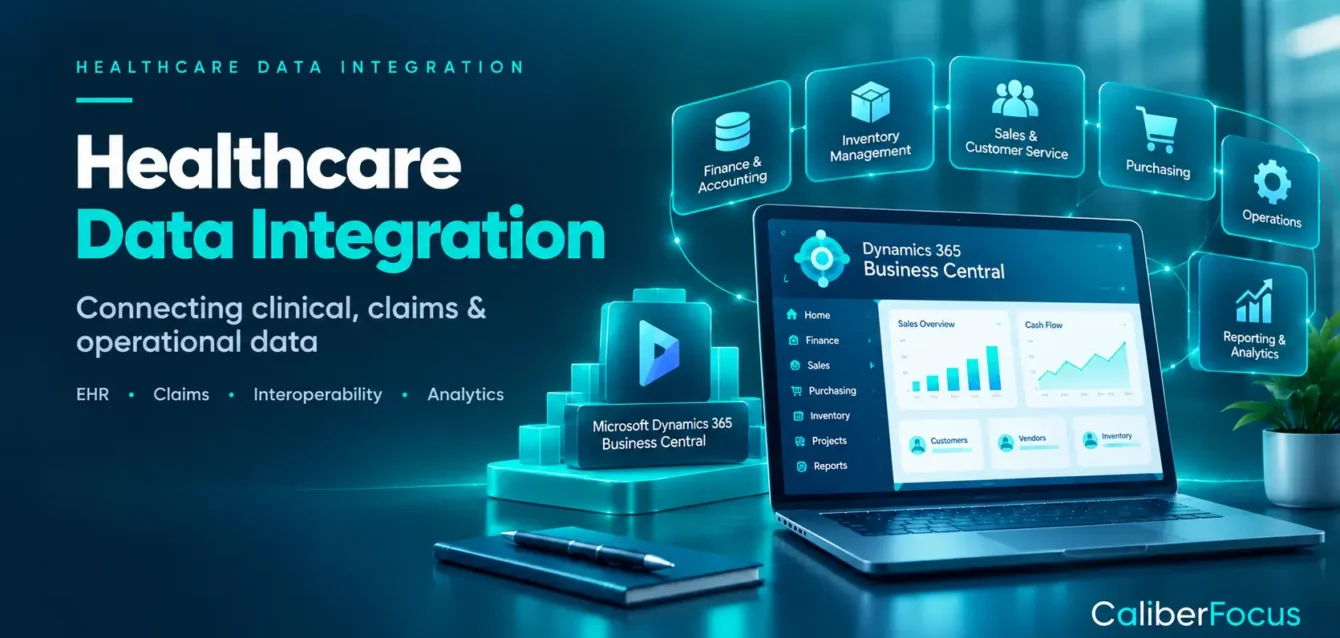
Healthcare organizations depend on information distributed across EHRs, claims platforms, laboratory systems, and enterprise applications. Connecting these sources requires more than transferring records. Data must remain consistent, accessible, and usable across clinical and operational workflows.
Healthcare data integration companies address different parts of this challenge, including:
- Data engineering and migration: Moving, transforming, and consolidating information across systems.
- Healthcare interoperability: Enabling clinical and administrative information exchange.
- Clinical data aggregation: Combining records from multiple sources into consistent datasets.
- Analytics integration: Preparing governed information for enterprise reporting and analysis.
Not every provider offers all four capabilities. This guide compares 10 healthcare data integration companies in 2026 to help healthcare decision-makers identify providers suited to their integration requirements.
Top 10 Healthcare Data Integration Companies at a Glance
| Company | Primary Specialization | Best Suited For |
|---|---|---|
| CaliberFocus | Custom data integration, data engineering, and pipeline modernization | Healthcare organizations integrating data across existing enterprise systems |
| Optum | Payer-provider connectivity and healthcare transactions | Health plans and providers exchanging clinical and administrative information |
| Health Catalyst | Healthcare data integration and analytics platforms | Health systems consolidating information for enterprise analytics |
| Innovaccer | Healthcare data aggregation and activation | Organizations developing unified patient data environments |
| Veradigm | Healthcare data solutions and provider technology ecosystems | Organizations seeking data products within supported healthcare environments |
| Datavant | Privacy-preserving healthcare data linkage | Organizations linking distributed healthcare datasets |
| Health Gorilla | Clinical interoperability and information exchange | Organizations accessing clinical information across networks |
| Availity | Payer-provider connectivity and clinical data normalization | Health plans and providers managing data exchange |
| CareEvolution | Healthcare data orchestration and standardization | Organizations building interoperable healthcare applications |
| Rhapsody | Healthcare integration engines and clinical messaging | Healthcare IT teams managing multiple clinical interfaces |
How Were These Healthcare Data Integration Companies Evaluated?
Healthcare data integration providers cannot be compared fairly using company size or the number of technologies they advertise. Their suitability depends on the systems involved, the type of information being exchanged, and the responsibilities the buyer expects them to assume.
This comparison considers five factors:
- Healthcare integration scope: Relevance to clinical, claims, financial, and operational data environments.
- Interoperability: Supported healthcare standards, interfaces, APIs, and network connectivity.
- Data engineering and quality: Capabilities involving ingestion, transformation, normalization, reconciliation, and governance.
- Delivery model: Whether the company offers consulting and implementation, a software platform, network access, or a combination.
- Buyer fit: Suitability for different healthcare architectures, internal technical capabilities, and business requirements.
These distinctions matter because a healthcare data platform, a custom engineering partner, and an interoperability network may solve different parts of the same integration challenge. Organizations evaluating the wider provider landscape can also review how data integration companies differ in their capabilities and delivery models.
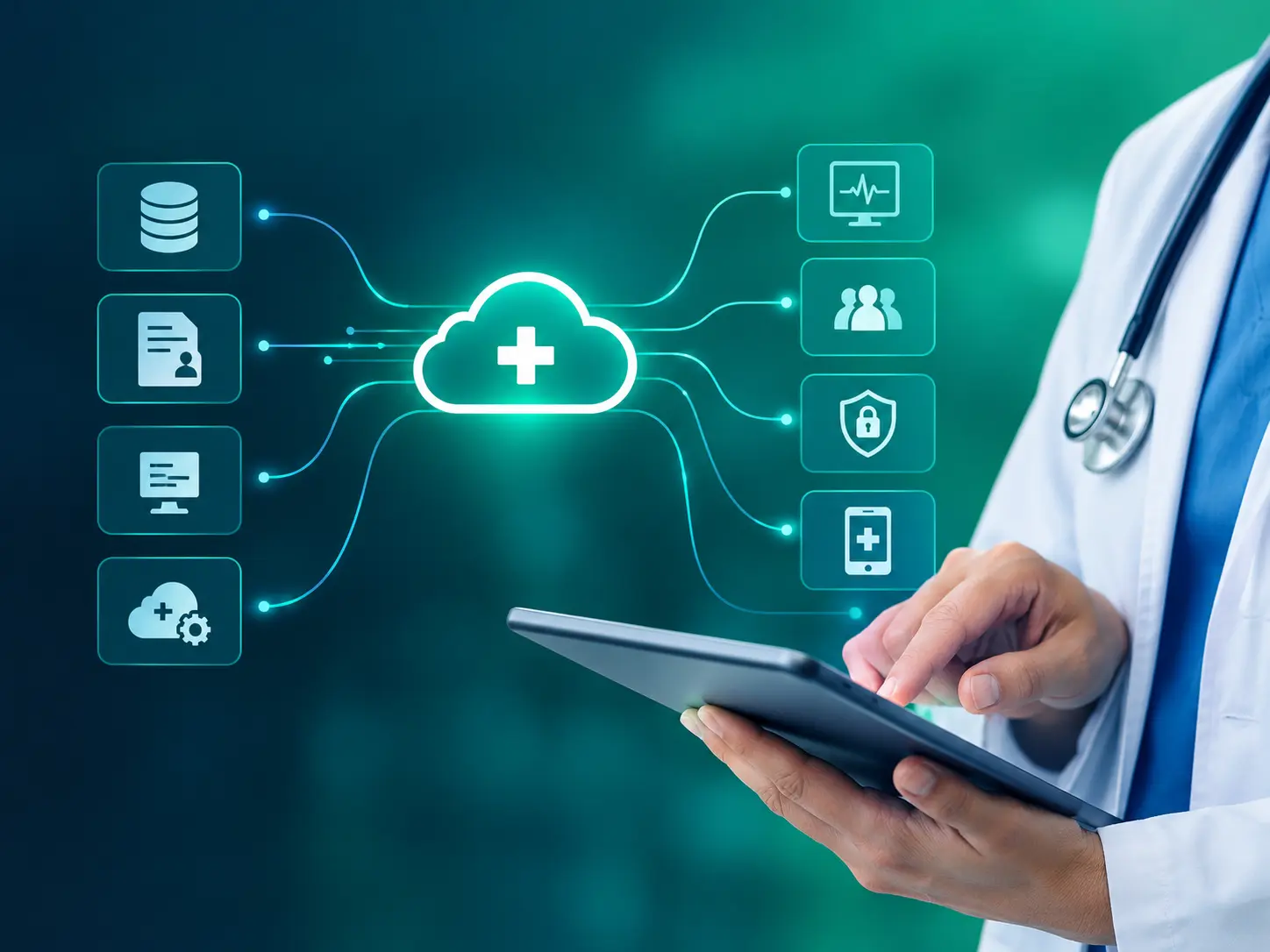
Find the Right Approach for Your Healthcare Data Integration Needs
EHR connectivity, fragmented data, and legacy systems require different integration approaches. CaliberFocus can help assess your requirements and define a practical path forward.
Top 10 Healthcare Data Integration Companies in 2026
CaliberFocus

Best for: Healthcare data integration, enterprise data engineering, and pipeline modernization.
CaliberFocus supports organizations that need to integrate fragmented enterprise information, modernize data pipelines, and establish reliable data foundations for reporting, analytics, and AI initiatives.
Its Data & Analytics capabilities are relevant to healthcare environments where information from clinical, claims, financial, and operational applications must be ingested, transformed, standardized, and made available for downstream use.
Core capabilities
- Enterprise data integration and pipeline engineering.
- ETL/ELT development and data transformation.
- Cloud data engineering and modernization.
- Data quality, governance, and pipeline monitoring.
- Analytics-ready data architecture.
Best-fit requirements: Integrating data from multiple enterprise sources, replacing legacy pipelines, modernizing data infrastructure, and supporting analytics initiatives.
What to evaluate: Source-system compatibility, data integration requirements, pipeline architecture, governance controls, and operational support responsibilities.
Healthcare data integration often requires reliable ingestion, transformation, and orchestration across multiple systems, making data engineering and pipeline development essential to maintaining consistent, accessible, and analytics-ready information.
Optum

Best for: Payer-provider connectivity and healthcare transaction exchange.
Optum provides healthcare connectivity and interoperability solutions relevant to administrative transactions and information exchange across payer and provider environments.
Its offerings are particularly relevant when an organization needs access to established healthcare transaction networks rather than only custom internal data pipelines.
Core capabilities
- Eligibility and benefits connectivity.
- Claims and remittance transactions.
- Payer-provider information exchange.
- Healthcare interoperability APIs.
- Administrative workflow connectivity.
Best-fit requirements: Health plans and providers managing recurring transaction exchange across organizations.
What to evaluate: Payer network coverage, transaction support, contractual requirements, and compatibility with existing systems.
Health Catalyst

Best for: Healthcare data integration supporting enterprise analytics.
Health Catalyst provides healthcare data and analytics technology designed to consolidate clinical, financial, and operational information for reporting and performance management.
Its platform-oriented approach is relevant when integration is part of a broader healthcare analytics initiative.
Core capabilities
- Healthcare data ingestion and integration.
- Clinical and operational data models.
- Data quality and standardization.
- Enterprise reporting and analytics.
- Healthcare-focused analytical infrastructure.
Best-fit requirements: Health systems seeking consistent datasets for enterprise analytics and performance measurement.
What to evaluate: Platform compatibility, supported source systems, data-model requirements, and implementation responsibilities.
Innovaccer

Best for: Healthcare data aggregation, patient record unification, and population health.
Innovaccer provides healthcare data platform capabilities for combining information from clinical, claims, and other healthcare sources.
Its focus on data harmonization and activation is relevant to organizations developing population health, care management, and patient-centered applications.
Core capabilities
- Multi-source healthcare data ingestion.
- Clinical and claims data harmonization.
- Patient and provider data unification.
- Data quality and identity management.
- Data activation for healthcare applications.
Best-fit requirements: Organizations requiring unified patient information across multiple care settings.
What to evaluate: Patient matching, data provenance, terminology normalization, and downstream application compatibility.
Veradigm

Best for: Healthcare data solutions within provider technology ecosystems.
Veradigm operates across healthcare technology and data solutions. Its healthcare data offerings include EHR-derived information products and services for supported use cases.
This positioning differs from that of a general-purpose custom data integration provider.
Core capabilities and areas to evaluate
- EHR-derived healthcare data.
- Clinical information harmonization.
- Provider technology ecosystem connectivity.
- Healthcare data access for supported use cases.
- Data services associated with its network.
Best-fit requirements: Organizations seeking healthcare data products or services associated with supported Veradigm environments.
What to evaluate: Product availability, data-use permissions, network coverage, and whether implementation services are included.
Datavant
Best for: Privacy-preserving healthcare data linkage across organizations.
Datavant focuses on connecting healthcare information across distributed datasets while addressing privacy-sensitive record linkage requirements.
Its capabilities are relevant to healthcare, research, and life sciences use cases involving information held by multiple organizations.
Core capabilities
- Privacy-preserving record linkage.
- Tokenization and patient matching.
- Cross-organizational healthcare data connectivity.
- Dataset linkage for research and analytics.
- Connectivity across healthcare data partners.
Best-fit requirements: Organizations linking patient-level information across distributed sources.
What to evaluate: Matching requirements, privacy controls, data-use permissions, and partner connectivity.
Health Gorilla

Best for: Clinical information exchange across healthcare networks.
Health Gorilla provides interoperability infrastructure for accessing and exchanging clinical information across healthcare participants and networks.
Its offerings are relevant when the requirement involves external clinical data access rather than only integration between applications inside one organization.
Core capabilities
- Clinical data retrieval and exchange.
- FHIR-based interoperability.
- Network-based clinical connectivity.
- Patient identity and record-location capabilities.
- Clinical information access services.
Best-fit requirements: Healthcare organizations and technology companies requiring clinical data from external participants.
What to evaluate: Network coverage, access eligibility, exchange permissions, and supported workflows.
Availity
Best for: Payer-provider connectivity and clinical data normalization.
Availity provides healthcare connectivity and interoperability solutions for health plans and providers.
Its portfolio includes clinical data quality technology associated with Diameter Health, which Availity acquired in 2022.
Core capabilities
- Payer-provider data exchange.
- Clinical data normalization.
- Data enrichment and standardization.
- Healthcare interoperability.
- Administrative connectivity solutions.
Best-fit requirements: Health plans and providers managing clinical and administrative information exchange.
What to evaluate: Connectivity coverage, supported transactions, clinical data requirements, and deployment responsibilities.
CareEvolution
Best for: Healthcare data aggregation, standardization, and API-based applications.
CareEvolution’s Orchestrate platform supports healthcare data ingestion, transformation, and standardization.
Its technology is relevant to organizations building applications or analytical environments that require consistent information from multiple healthcare sources.
Core capabilities
- EHR and claims data ingestion.
- Healthcare data aggregation.
- Patient identity matching.
- Clinical terminology normalization.
- APIs for downstream applications.
Best-fit requirements: Healthcare technology and data teams developing interoperable applications.
What to evaluate: Source-format compatibility, data-model requirements, API functionality, and implementation architecture.
Rhapsody (formerly Lyniate)

Best for: Healthcare interface engines and clinical messaging.
Rhapsody provides healthcare integration technology for connecting clinical applications and managing information exchange.
Its integration engine is relevant to healthcare IT environments that require message transformation, routing, monitoring, and interface management.
Core capabilities
- Healthcare interface development.
- HL7 message processing.
- FHIR integration.
- Data transformation and routing.
- Interface monitoring and management.
Best-fit requirements: Hospitals and healthcare IT teams operating multiple clinical interfaces.
What to evaluate: Supported formats, interface volumes, engineering ownership, and ongoing maintenance requirements.
Which Healthcare Data Integration Company Fits Your Requirements?
Selecting a provider begins with identifying the type of integration work required. A vendor specializing in clinical network access may not be the right choice for enterprise data migration or custom pipeline development.
| Business Requirement | Capabilities to Prioritize | Relevant Provider Type |
|---|---|---|
| EHR integration | HL7/FHIR interfaces, workflow testing, reliable exchange | Custom integration specialists and interface-engine providers |
| Healthcare data migration | Data mapping, transformation, reconciliation, cutover planning | Data engineering and migration service providers |
| Healthcare data aggregation | Multi-source ingestion, patient matching, normalization | Healthcare data platforms |
| Payer-provider integration | X12 transactions, FHIR APIs, payer connectivity | Healthcare connectivity networks |
| Clinical information exchange | External data access, identity matching, interoperability | Clinical interoperability networks |
| Healthcare analytics integration | Governed pipelines, standardized data models, quality controls | Data engineering providers and analytics platforms |
EHR Integration vs. Healthcare Data Migration
EHR integration establishes ongoing information exchange between clinical systems and connected applications. Healthcare data migration involves transferring existing information into a different environment, often during platform replacement, consolidation, or modernization.
A health system replacing an EHR may need both. Historical records require mapping and reconciliation, while laboratory, billing, and other operational interfaces must continue functioning after the transition.
When comparing cloud data migration companies, healthcare organizations should look beyond the ability to transfer records. The provider must also account for data integrity, historical accessibility, cutover dependencies, and continuity of downstream processes.
Healthcare Data Aggregation vs. Basic System Connectivity
Moving data between applications does not automatically produce consistent or usable records.
Healthcare data aggregation may require patient identity matching, terminology mapping, duplicate detection, normalization, and traceability to the original source. These processes become especially important when clinical and claims information from different systems must support a common patient view.
Organizations should distinguish between three requirements: exchanging data, consolidating data, and preparing information for downstream applications or analytics.
These requirements may overlap, but they influence which providers and technologies belong on the shortlist.
Healthcare Data Integration Tools vs. Integration Services
Integration tools provide technology for moving, routing, or transforming information. Integration services cover the work needed to assess requirements, design architecture, implement connections, validate outputs, and support operations.
An organization with an experienced internal integration team may prefer a platform it can configure and manage. Another may need an engineering partner to implement and maintain pipelines across its existing systems.
When an initiative involves replacing legacy ingestion or transformation jobs, the evaluation should also address ETL migration to cloud, including orchestration, monitoring, source dependencies, and long-term pipeline ownership.
What Should Healthcare Data Integration Services Deliver?
An integration engagement should produce more than a set of connected systems. Healthcare organizations need to know whether data is complete, accurate, appropriately secured, and available to the processes that depend on it.
| Engagement Model | Typical Scope | Expected Deliverables |
| Strategy and Architecture | System assessment, requirements, target architecture, dependencies | Integration roadmap and architecture plan |
| Implementation and Migration | Interface development, pipeline engineering, transformation, validation | Tested data flows, reconciliation results, deployment documentation |
| Managed Integration | Monitoring, incident response, interface updates, optimization | Operational support model, monitoring procedures, escalation ownership |
For production integrations, acceptance criteria should address data completeness, error handling, access controls, transaction reliability, and support responsibilities.
A successful connection does not necessarily mean the information is usable. For example, a pipeline may run without technical errors while still producing duplicate records or inconsistent mappings.
When Integration Becomes a Data Modernization Initiative
Healthcare organizations should also determine whether existing infrastructure can support the integration over time.
Adding more connections to an outdated architecture may preserve existing limitations in scalability, observability, and data processing. Organizations consolidating facilities, expanding data sources, or changing cloud environments may need to evaluate broader cloud data modernization strategies rather than extending legacy pipelines indefinitely.
The objective is not to modernize every system at once. It is to identify which architectural limitations materially affect the required data flows and future business needs.
How Healthcare Data Integration Supports Enterprise Analytics
Healthcare organizations often need to analyze information that sits across different systems. An EHR captures clinical encounters, claims platforms record billing and reimbursement activity, and financial applications track revenue and costs. Analyzing these datasets together requires consistent identifiers, data definitions, and validated relationships between records.
For example, a health system examining reimbursement performance may need to connect patient encounters with submitted claims, payment records, and service-level financial information. Without this integration, teams may be able to report on each system separately but struggle to understand how clinical activity relates to financial outcomes.
What integrated healthcare data makes possible
| Integrated Data Sources | Integration Requirement | Analytics and Operational Use Cases |
| EHR and patient access systems | Connect scheduling, registration, encounter, and patient information | Patient access trends, appointment utilization, no-show analysis, referral patterns, capacity planning |
| EHR and claims platforms | Link clinical encounters, documented services, claims, and reimbursement records | Coding and billing trends, denial analysis, reimbursement variations, service-level revenue analysis |
| Clinical and operational systems | Standardize clinical activity, service volumes, and departmental measures | Resource utilization, care delivery trends, departmental productivity, facility performance comparisons |
| Claims and financial applications | Reconcile claims, payments, adjustments, and financial transactions | Revenue performance, payment variance analysis, payer performance, outstanding receivables, financial forecasting inputs |
| EHR, laboratory, and diagnostic systems | Associate patient records with laboratory orders, results, and diagnostic information | Test utilization, turnaround time analysis, diagnostic workflow performance, care coordination reporting |
These use cases depend on accurate source mapping, consistent measures, and data quality controls. Once those foundations are established, descriptive analytics can help healthcare leaders examine historical performance, identify variations, and investigate trends across integrated datasets.
The role of data analytics services extends beyond connecting sources to developing reporting models, analytical workflows, and decision-support capabilities using the integrated information.

Connected Hospital Data, Stronger Operational Decisions
A regional hospital network struggled with fragmented reporting across facilities. CaliberFocus unified critical data through Microsoft Fabric, enabling real-time visibility into hospital operations.
How to Evaluate a Healthcare Data Integration Partner
A credible vendor evaluation should establish whether a provider can meet the organization’s actual integration requirements, not simply whether its website lists the right technologies.
1. Define the Integration Scope Before Shortlisting Vendors
Identify the source systems, destination environments, required data flows, business owners, and downstream applications.
A structured data strategy roadmap can help organizations assess current-state gaps, establish architecture priorities, and sequence the work needed to support integration and analytics initiatives.
The output should be a documented scope that vendors can evaluate consistently.
2. Validate Experience With Relevant Healthcare Systems
Request examples involving comparable EHRs, claims platforms, laboratory systems, or operational applications. Clarify whether the provider designed and implemented the integration or supplied only the underlying technology.
Relevant implementation experience matters more than a broad list of healthcare technologies.
3. Confirm Interoperability Requirements
Identify the relevant standards and versions, including HL7 v2, FHIR, X12, C-CDA, or DICOM where applicable.
Evaluate message mapping, transformation, validation, error handling, and how changes to source or destination systems will be managed.
4. Examine Data Quality and Governance
Ask how the provider identifies missing records, duplicate information, inconsistent values, and source-to-target discrepancies. Define acceptance criteria before implementation.
Data ownership, access controls, quality responsibilities, and traceability should also be established. A documented data governance framework provides additional guidance for defining the policies and responsibilities that support consistent data management.
5. Establish Operational Ownership
Determine who monitors failed transactions, investigates exceptions, manages source-system changes, and maintains integrations after deployment.
A strong proposal should document the architecture, implementation scope, testing approach, dependencies, support model, and acceptance criteria.
Why Consider CaliberFocus for Healthcare Data Integration?
Healthcare organizations often need to address several connected requirements: integrating existing data sources, modernizing pipelines, improving data consistency, and making information available for reporting and analytics.
CaliberFocus’s Data & Analytics capabilities span these areas, making it relevant when integration is part of a broader enterprise data initiative.
Its services can be considered for organizations planning to:
- Integrate clinical, claims, financial, and operational datasets.
- Modernize legacy ingestion and transformation pipelines.
- Improve data quality and consistency.
- Establish governed data environments.
- Support analytics and AI applications with reliable data foundations.
The appropriate approach depends on the organization’s source systems, current architecture, internal expertise, and business priorities.

Build a More Reliable Healthcare Data Integration Foundation
Whether you’re connecting fragmented healthcare data sources, modernizing legacy pipelines, or preparing information for enterprise analytics, start by evaluating the systems, data quality requirements, and operational dependencies involved.
Frequently Asked Questions
Document the EHR environment, required interfaces, data formats, and connected workflows. Evaluate providers based on relevant implementation experience, standards compatibility, testing procedures, security requirements, and support responsibilities.
Integration services involve consulting, architecture, implementation, migration, and operational support. Integration solutions may refer to software platforms, integration engines, APIs, or combined technology-and-service offerings.
Some providers support both, but the capabilities should be assessed separately. Migration involves transferring and validating historical data, while ongoing integration involves maintaining reliable information exchange between systems.
Prioritize source connectivity, patient identity matching, terminology normalization, duplicate handling, data provenance, governance, and downstream accessibility.
Optum and Availity are examples of companies with payer-provider connectivity offerings. Suitability depends on network coverage, supported transactions, clinical exchange requirements, and contractual arrangements.
Organizations with established integration teams may prefer platforms they can manage internally. Services partners are relevant when specialized engineering, migration expertise, implementation capacity, or ongoing support is required. Some projects need both.
Timelines depend on the number of systems, interface complexity, data quality, migration scope, testing requirements, and stakeholder availability. Request a phased plan with documented milestones and acceptance criteria rather than relying on a generic estimate.

Continue Reading
More on Healthcare Data Analytics
How Data Analytics Is Transforming Patient Care in Healthcare
Explore how healthcare data analytics can support clinical insights, care coordination, and more informed patient care decisions.
Read MorePatient Access and Registration Analytics in Healthcare
Learn how analytics can help healthcare organizations evaluate registration processes, patient access, and operational performance.
Read MoreData Analytics in Healthcare
Discover how healthcare organizations can use data analytics to improve visibility into operations and support data-driven decisions.
Read More