

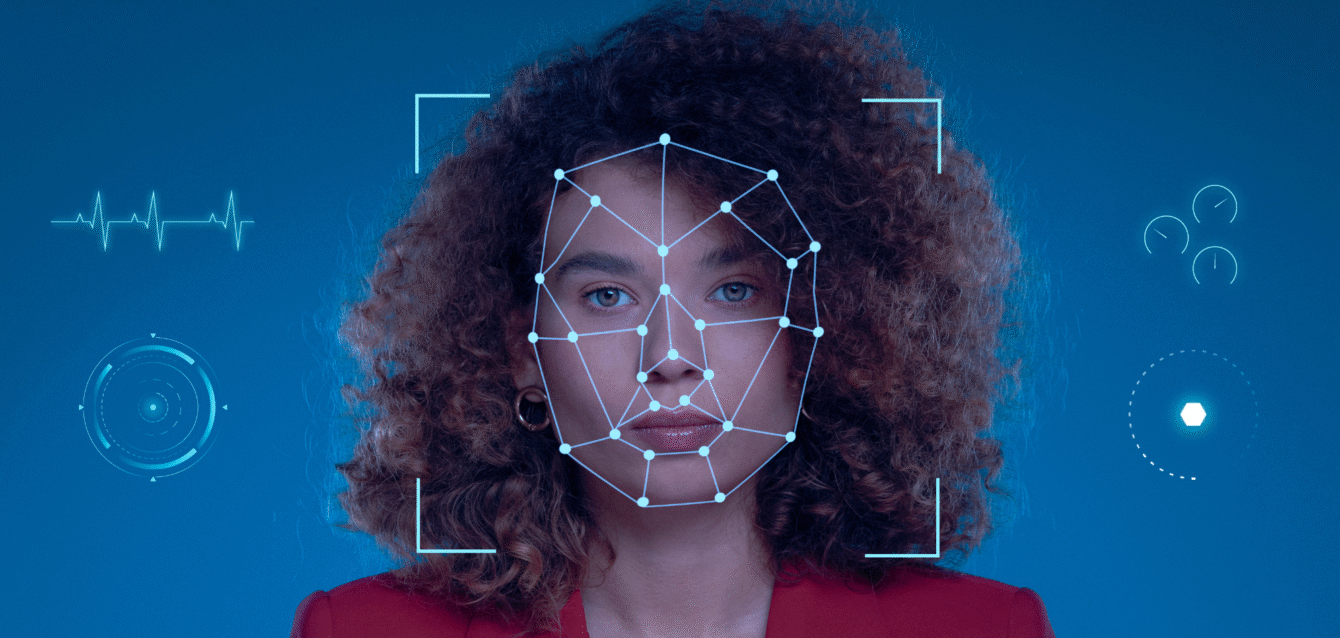
The global computer vision market is projected to reach $41.11 billion by 2030, growing at 19.6% annually. (Grand View Research) Behind that number, manufacturers, hospitals, logistics operators, and retailers are actively replacing manual visual processes with AI systems that run continuously and catch what human inspection misses.
Most computer vision projects do not fail because of bad models. They fail because of bad systems.
A model trained in a controlled environment performs well in a demo. Move it to a factory floor with shifting lighting, new product variants, and operational changes every quarter, and accuracy degrades quietly. Most enterprises find out three to six months after deployment, when the vendor is no longer accountable.
Getting computer vision to work in a demo is straightforward. Getting it to hold accuracy six months into production, on your hardware, under your compliance requirements, is where most vendors fall short. The companies below are evaluated on exactly that.
Why Enterprises Are Getting CV Wrong
Three things have made production CV more practical in the past two years:
- Edge hardware costs dropped. Real-time inference now runs directly on factory floors without sending data to external servers.
- Data labeling got faster. Dataset preparation time has fallen 60 to 80% compared to 2022. (Scale AI, 2023)
- Compliance guidance arrived. HIPAA, GDPR, and ISO 27001 now explicitly cover AI vision systems, removing the legal ambiguity that stalled healthcare and finance adoption.
The problem is not access anymore. The problem is vendor selection.
Most enterprises pick a computer vision development company the same way they buy software. Deploy it, move on. But CV systems need calibration, monitoring, and retraining as conditions shift. A custom computer vision development company owns that responsibility after go-live. Most vendors do not.
Before shortlisting any computer vision development companies, three questions worth asking:
Have they worked in your specific industry before?
Who owns model accuracy after deployment, your team or theirs?
Can they deploy on-site or only to cloud?
Top Computer Vision Development Companies in 2026
These companies are ranked based on six criteria: production deployment depth, real-time and edge capability, industry-specific experience, custom model architecture, compliance handling, and long-term system support. No company on this list paid for placement
CaliberFocus

Full-system computer vision development for enterprise environments.
CaliberFocus builds computer vision as a complete operational system, covering data pipelines, model architecture, deployment, monitoring, and scheduled retraining. The focus is on systems that hold accuracy in real production conditions, not just at launch.
What they build:
- Defect detection and visual quality inspection
- Real-time video analytics and scene understanding
- OCR and document intelligence pipelines
- Facial recognition and identity verification
- Edge, cloud, and hybrid CV deployments
Industries: Manufacturing, healthcare, banking, logistics, retail HQ: Orlando, FL, USA
Best for: Enterprises deploying CV in regulated or compliance-sensitive environments where post-deployment performance accountability matters.
A Tier-1 automotive parts manufacturer reduced inspection labor cost by 42% within one quarter of deploying CaliberFocus defect detection across three production lines.
Prismetric

Custom AI development with strong computer vision engineering across regulated industries.
Prismetric brings solid technical depth in computer vision, particularly for clients who need custom model development paired with mobile or web application delivery. Their documented track record in healthcare imaging makes them a credible option for regulated-sector buyers.
Core capabilities:
- Custom CNN and transformer-based vision models
- Medical imaging and diagnostic support systems
- Quality inspection for manufacturing
- Document and OCR intelligence pipelines
Industries: Healthcare, manufacturing, fintech Founded: 2008 | HQ: India
Best for: Healthcare and fintech companies needing compliant CV development with application integration.
Appinventiv

Digital product engineering with embedded computer vision capabilities.
Appinventiv approaches CV from a product-first perspective. Their strongest use cases are applications where vision is one capability within a larger mobile or enterprise platform, rather than the sole deliverable. Fast execution and strong product design make them a solid choice for consumer-facing AI features.
Core capabilities:
- CV features embedded in mobile applications
- Facial recognition and identity verification
- Augmented reality integrations
- Retail and e-commerce visual search
Industries: Consumer, retail, enterprise SaaS Founded: 2015 | HQ: India
Best for: Companies building AI-enabled consumer or enterprise products where CV is one feature among many.
Lemberg Solutions

Embedded and edge-first computer vision for industrial and IoT environments.
Lemberg brings a hardware engineering background to CV development, which makes them distinctly capable when vision systems need to run on constrained devices or integrate tightly with physical equipment. They are one of the few companies on this list where software and hardware engineering are genuinely unified.
Core capabilities:
- Edge and embedded CV deployments
- Industrial IoT sensor and camera integration
- Custom firmware and driver development for vision hardware
- Real-time anomaly detection on constrained hardware
Industries: Industrial automation, IoT, smart infrastructure Founded: 2007 | HQ: Ukraine
Best for: Industrial companies deploying CV in hardware-constrained or offline environments.
Jidoka Tech

Manufacturing-specialist computer vision for quality control and process automation.
Jidoka does one thing and does it well: automated visual inspection for manufacturing. Their narrow focus is a feature, not a limitation. Clients in automotive, electronics, and consumer goods manufacturing get solutions that are calibrated to the specific demands of production lines, not adapted from generic AI platforms.
Core capabilities:
- Defect detection and classification
- Visual quality control automation
- Production line monitoring and throughput analytics
- Integration with existing MES and ERP systems
Industries: Manufacturing, automotive, electronics Founded: 2019 | HQ: United States
Best for: Manufacturers replacing manual inspection with automated defect detection.
SunTec.ai

Document intelligence and OCR-driven CV for financial and enterprise operations.
SunTec focuses on the document side of computer vision. High-volume, high-accuracy extraction of structured and unstructured data from contracts, forms, invoices, and compliance documents is their core strength. Less suited to real-time video or industrial vision, but extremely capable for document-heavy enterprise workflows.
Core capabilities:
- Intelligent document processing and OCR
- Financial data extraction and reconciliation
- Compliance document automation
- Multi-language and multi-format document pipelines
Industries: Banking, insurance, legal, enterprise Founded: 1999 | HQ: India
Best for: Financial institutions modernizing document-heavy back-office operations.
Aptimized
AI-powered computer vision solutions for enterprise innovation.
Aptimized develops scalable computer vision and AI solutions that help organizations automate processes, improve operational efficiency, and accelerate digital transformation through cloud-native, enterprise-ready technologies.
What they build:
Computer vision solutions
Defect detection and visual inspection
OCR and document processing
Real-time video analytics
Object detection and image recognition
Edge, cloud, and hybrid AI deployments
Industries: Manufacturing, Healthcare, Retail, Financial Services, Logistics
HQ: Wayne, New Jersey, USA
Best for: Enterprises looking to deploy secure, scalable computer vision and AI solutions alongside cloud and digital transformation initiatives.
Roboflow
Developer platform for building, training, and deploying computer vision models.
Roboflow is not a services company. It is a platform that engineering teams use to build CV faster. Dataset management, labeling workflows, model training, and deployment tooling are all consolidated in one environment. If your team has the internal engineering depth to build but needs better infrastructure and tooling, Roboflow accelerates that process significantly.
Core capabilities:
- Dataset management and augmentation
- Model training and iteration tooling
- Deployment and inference API
- Active learning and model monitoring
Industries: Cross-industry (developer and engineering teams) Founded: 2019 | HQ: United States
Best for: Engineering teams building in-house CV systems who need professional-grade tooling without a full services engagement.
Metropolis
Infrastructure-grade computer vision for mobility and physical environments.
Metropolis has built a proprietary CV stack for a specific and demanding environment: parking, access control, and urban mobility infrastructure. Their systems process real-time video at scale in outdoor, variable-condition environments where reliability and uptime matter more than experimentation. This is computer vision as infrastructure.
Core capabilities:
- Real-time license plate recognition and vehicle tracking
- Access control and occupancy analytics
- Computer vision for smart parking and mobility
- Video analytics for physical security
Industries: Mobility, smart cities, parking infrastructure Founded: 2017 | HQ: United States
Best for: Mobility operators and smart city infrastructure teams needing purpose-built CV at scale.
Suffescom Solutions

Full-stack AI development with computer vision as part of broader application delivery.
Suffescom handles CV as one component within larger digital transformation engagements. Their value is in end-to-end delivery speed, particularly for early-stage and mid-market organizations that want to move from idea to working product quickly. Not the choice for deep standalone CV infrastructure, but solid for getting an AI-enabled application to market.
Core capabilities:
- CV-enabled mobile and web applications
- AI-powered enterprise software development
- Proof-of-concept and MVP delivery
- Chatbot and vision feature integration
Industries: Startup, mid-market, enterprise Founded: 2013 | HQ: India
Best for: Startups and mid-sized companies building AI-enabled applications with embedded vision features.
Cognex

Industrial machine vision hardware and software leader.
Cognex is one of the most established names in machine vision, with over four decades in factory automation. Unlike AI-first companies on this list, Cognex combines proprietary hardware, embedded vision systems, and industry-hardened software into tightly integrated solutions. Where stability and certified performance matter more than flexibility, Cognex is the default choice for large manufacturers.
Core capabilities:
- Industrial-grade vision hardware and cameras
- Machine vision systems for assembly verification
- Barcode and identification systems
- Vision-guided robotics integration
Industries: Large-scale manufacturing, automotive, semiconductor Founded: 1981 | HQ: United States
Best for: Large manufacturing operations that require certified, hardware-integrated machine vision with decades of proven deployment.
Quick Comparison
| Company | Core Focus | Deployment | Best For |
| CaliberFocus | Full-system CV: data pipeline, model, deployment, monitoring, retraining | Edge, cloud, hybrid | Regulated industries, compliance-critical deployments, post-launch performance ownership |
| Space-O Technologies | End-to-end CV development | Cloud, hybrid | First production CV system |
| Prismetric | Custom CV for regulated industries | Cloud, on-prem | Healthcare, fintech |
| Lemberg Solutions | Edge and embedded CV | Edge, hybrid | Industrial IoT environments |
| Jidoka Tech | Manufacturing visual inspection | Edge, on-prem | Automated defect detection |
| SunTec.ai | Document intelligence and OCR | Cloud | Financial back-office workflows |
| Roboflow | CV developer tooling platform | Cloud, edge | In-house engineering teams |
| Metropolis | Mobility and access control CV | Edge, cloud | Smart city and parking operators |
| Suffescom Solutions | AI application development | Cloud | Startup and mid-market |
| Cognex | Industrial machine vision hardware | On-prem, edge | Large-scale manufacturing |
Need help matching your use case to the right partner? Book a free 30-minute CV scoping session with CaliberFocus
Custom Computer Vision Development vs. Off-the-Shelf APIs
Before contacting any custom computer vision software development company, most enterprises ask the same question: do we actually need custom, or will AWS Rekognition, Google Vision API, or Azure CV do the job?
The answer sits in your data.
| Factor | API-based | Custom CV |
| Setup time | Hours to days | 8 to 20 weeks |
| Accuracy on generic objects | 85 to 95% | High (trained specifically) |
| Accuracy on your specific data | 65 to 78% | 95 to 99%+ |
| Edge deployment | Limited | Fully supported |
| Data residency control | Limited | Full control |
| Long-term cost at scale | High (per call) | Lower (owned model) |
Custom CV makes sense when:
- Your defects, products, or environments are not covered by generic training data
- Your system needs to run on-site without cloud dependency
- You are in a regulated industry where data cannot leave your infrastructure
APIs are fine when: Generic image tagging, basic content moderation, or low-stakes consumer apps where accuracy above 80% is not a hard requirement.
A practical test: take 20 images from your actual production environment and run them through a pre-built API. The accuracy you see there is roughly your ceiling without a custom computer vision development company building on your data specifically.
Where Computer Vision Is Delivering Results
Each industry below has distinct requirements that shape how a computer vision development services company scopes and builds the system.
- Healthcare: RCM automation through document intelligence, combined with radiology AI flagging anomalies in X-ray, MRI, and CT data, with HIPAA and FDA 510k compliance built in from day one.
- Manufacturing: Automated defect detection replacing manual QC, with 35 to 60% reduction in inspection labor cost. (McKinsey, 2023)
- Logistics: Package dimensioning, damaged goods detection, and robotic vision guidance running on on-site hardware in real time.
- Retail: Shelf monitoring, planogram compliance, and self-checkout loss detection with consumer data privacy requirements attached.
- Financial Services: Document intelligence covering KYC verification, signature validation, and fraud pattern detection.
- Energy, Construction, and Agriculture: Infrastructure inspection, site safety monitoring, and crop health detection where manual observation is either too slow or too hazardous.
How CaliberFocus Delivers Computer Vision Services
CaliberFocus operates differently from vendors who deliver a trained model and close the engagement. Here is what the actual process looks like:
Scoping (Week 1 to 2) The team reviews your visual problem, existing data, infrastructure, and compliance requirements before scoping begins. An ROI projection is produced at this stage, before any contract is signed.
Data and Model Development (Week 3 to 10) Training data is built from your environment and conditions. Models are tested against your production data, not benchmark datasets. Edge deployment is planned in parallel where required.
Deployment and Handover (Week 10 to 16) Systems go live with monitoring pipelines active from day one. Accuracy drift detection and scheduled retraining are part of delivery, not optional add-ons.
Post-Launch Support Performance SLAs, retraining schedules, and escalation paths are defined before go-live. Your internal team receives full documentation and operational training.
Not Sure Which CV Approach Fits Your Environment?
Get a free 30-minute scoping session, we assess your use case, data environment, and give you a deployment estimate before any commitment.
Book a Free Scoping Session →Frequently Asked Questions
Single-environment systems typically range from $75,000 to $150,000. Multi-site or compliance-heavy deployments with long-term support range from $250,000 upward. Cost is driven by data complexity, deployment architecture, and whether the vendor owns post-launch performance.
Pre-built APIs are trained on generic datasets and typically plateau at 70 to 80% accuracy on domain-specific visual data. Custom development builds models on your data and your conditions. For industrial, medical, or compliance use cases where accuracy needs to exceed 95%, custom development is the practical path.
A well-scoped single-environment system takes 8 to 12 weeks. Multi-site or regulated deployments take 14 to 20 weeks. Timelines under 6 weeks for a production-ready custom system usually indicate a narrowly scoped problem or shortcuts in data quality and testing.