

A RAG implementation rarely fails because of the language model. It fails because the knowledge behind it isn’t ready for production. Outdated documents. Poor chunking strategies. Missing metadata. Weak retrieval logic. No access controls. No monitoring after deployment. Individually these look…
AI Agents in Healthcare Explained for Healthcare Leaders
A patient repeats the same medical history during registration, triage, and the consultation. A clinician spends valuable time searching through scattered records before making a decision. Follow-up reminders arrive late, and small gaps in communication gradually become missed appointments or delayed…
RAG vs Fine-Tuning: Which Should Your Enterprise Choose?
Enterprise AI is not stalling because the models are weak. It is stalling because teams keep answering the wrong question, whether to use RAG or fine tuning, before they answer the question underneath it: does this project have a knowledge problem…
RAG and Agentic AI: Key Differences Use Cases and Business Impact
RAG vs Agentic AI: Which AI Architecture Is Right for Your Business? Choosing between Retrieval-Augmented Generation (RAG) and Agentic AI depends on what you expect AI to accomplish. If your goal is to deliver accurate, up-to-date answers from enterprise knowledge, RAG…

A Complete Guide to AI Data Integration for Enterprises
Most enterprise AI projects run into serious problems before the model produces a single output. The data infrastructure beneath the model is not ready for it. AI data integration is the process of connecting, harmonizing, and governing data from multiple systems…
Medical Coding Automation: How AI Coding Agents Improve Accuracy, Speed, and HCC Capture
Your coding backlog is not a staffing problem anymore. It is a structural one. Hospitals are sitting on 10 to 45 day chart backlogs. Practices are one sick coder away from a frozen cash flow. RCM companies are quoting lower fees…
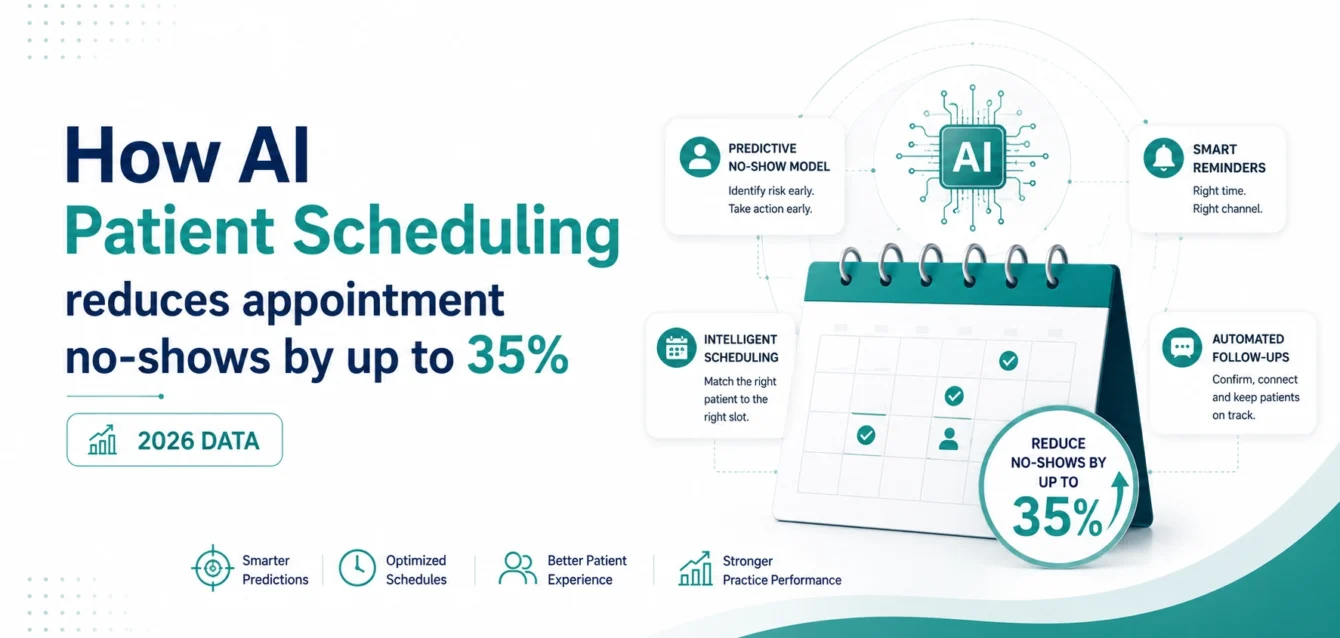
How AI patient scheduling reduces appointment no-shows by up to 35% – 2026 data
Your Scheduling System Is Running. Your Revenue Cycle Is Still Bleeding. Hospital revenue cycle leaders have spent years optimizing denials management, AR follow-up, and claims adjudication, while the break that feeds all three sits quietly at patient access. A mid-size health…
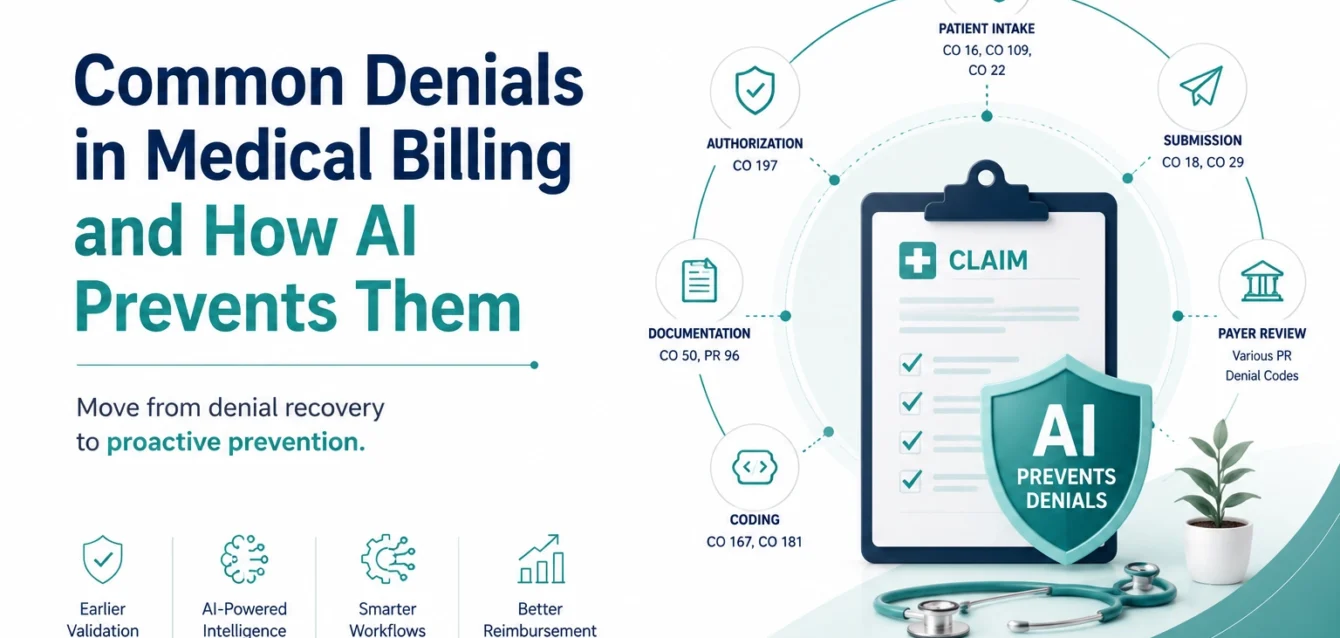
Common Denials in Medical Billing and How AI Prevents Them
Medical billing denials are rarely random. Most organizations already know the common codes appearing across their remittance files. The challenge is not identifying them. The challenge is reducing them consistently without adding more manual review, more spreadsheets, or more rework cycles….
Agentic AI Workflows in Healthcare RCM: What Most Teams Still Missing
The average healthcare organization writes off 3–5% of net patient revenue every year, not because payers are winning, but because the RCM stack can’t make a decision fast enough to stop them. Agentic AI workflows in RCM are built for exactly…

AI in Healthcare Workforce Planning: What Scheduling Software Can’t Do
The opportunity AI creates in healthcare workforce planning isn’t about doing new things. It’s about fixing what already isn’t working, with tools current systems were never designed to be. Scheduling platforms got upgraded. Labor dashboards exist. Workforce analysts were hired. Some…